Built Together: How Mobil’s Equipment Builder Partnerships Are Shaping Reliability in Indian Manufacturing
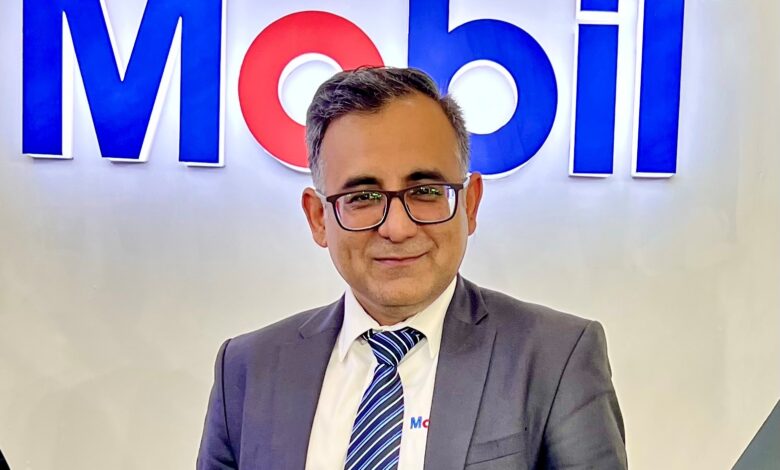
Interaction with Mr Imtiaz Ahmed, Equipment Builder (OEM) Commercialization Manager-India. ExxonMobil Lubricants Pvt Ltd

Q1. Equipment builder approvals are often mentioned as a mark of credibility for lubricant brands, but the numbers behind them are rarely discussed in detail. Just how significant is Mobil’s global equipment builder network, and why should this scale matter to an Indian manufacturer evaluating a lubrication partner?
Globally, Mobil™ holds relationships and equipment builder approvals with 35,000+ OEMs. That is not a handful of partnerships concentrated in a few markets or a few product categories, it is a genuinely global network, built over more than 150 years of Mobil’s lubrication expertise across virtually every industrial application in existence.
For a manufacturer evaluating a lubrication partner, this scale translates into something very practical: confidence. It means the fluid running in their machine is one the equipment builder itself has tested, validated and trusts, rather than a product selected independently of the machine it is meant to protect. These relationships are not built overnight. They develop gradually, through engineering validation under real operating conditions, application by application, and Mobil™ treats that trust as a responsibility to be maintained rather than a credential to simply display.
Q2. Beyond the scale of the network, how does this collaboration actually function on a day-to-day, project-by-project basis? At what stage in an equipment builder’s process does Mobil™ typically get involved, and why does that timing matter to the end customer?
A machine and its lubrication are, in most cases, still procured as two separate purchases, even though the customer ultimately experiences them as a single system working together. This is precisely why Mobil™ engages with equipment builders during the design and specification stage of a machine’s development, well before a single unit reaches a customer’s shop floor, so that the equipment and the lubrication strategy are aligned before installation rather than reconciled afterward.
This early engagement changes what the customer actually experiences. Because the lubrication strategy is built around the equipment’s real operating requirements from the outset, rather than fitted around it once the machine is already running, the practical benefit shows up in two places: reduced uncertainty at the point of commissioning, and faster resolution of technical questions if something comes up later during the equipment’s operating life.
Q3. Setting the technical process aside for a moment, what does all of this actually mean for a plant manager or maintenance head on the shop floor, in terms they would recognise day to day?
The clearest way to describe it is fewer unknowns. When equipment builders and Mobil’s lubrication experts have already worked through the technical requirements together, a customer receives lubrication recommendations that are already validated for their specific application, along with technical support tailored to how that equipment is actually used, rather than generic guidance.
This also enables faster problem-solving when issues do arise, because there is already a shared technical understanding between the equipment builder and Mobil™ to draw on rather than starting from scratch. And builder-approved lubrication carries a further, often underappreciated benefit: protected warranties and validated performance, which removes a variable that manufacturers would otherwise have to manage entirely on their own, and one less thing that can quietly go wrong without anyone noticing until it is expensive to fix.
Q4. Equipment builder collaboration is a major pillar of how Mobil™ operates, but it does not exist in isolation. How does this collaboration connect to the rest of what Mobil™ brings to a manufacturing customer?
Equipment builder collaboration is one part of a considerably wider approach, one that spans a genuine ecosystem of products and services built for the shop floor.
For machine shops, Mobil Vactra™ keeps slideway operation smooth and precise, Mobilcut™ resists biological growth to extend sump life, and Mobil Velocite™ protects high-speed spindles against oxidation and water contamination. For heavier industrial applications, Mobil SHC™ 600 delivers high-temperature protection for gearboxes and bearings, Mobilgrease™ XHP 462 Moly extends re-greasing intervals and resists water washout in heavy equipment applications, and Mobil DTE 10 Excel™ improves hydraulic pump efficiency and oil life, and Mobil DTE 10 Excel™ improves hydraulic pump efficiency and oil life.
On the services side, Mobil™ Lubricant Analysis (MLA) gives operators digital, data-backed condition monitoring, MachineXT brings on-site oil filtration directly to the plant floor, Mobil Solcare™ replaces manual coolant checks with structured digital monitoring, and Mobil IIoT connects real-time machine data to support predictive maintenance.
This is the drive behind the Fill with Mobil™ campaign: it brings together technical expertise, application knowledge and long-standing partnerships, both with equipment builders and with customers directly, into a single, coherent offering. It is also the same principle captured in the idea of being “For Experts, By Experts,” bringing deep application knowledge to every conversation on the shop floor, not just to the products on the shelf.
Q5. Where can manufacturers actually see this collaboration in action, rather than simply reading about it in a brochure or a data sheet?
Industry events, more than any other single channel, offer a direct and continuous window into it, and Mobil’s presence at these platforms is not occasional, it is a sustained part of how Mobil™ engages with India’s manufacturing and industrial ecosystem across sectors. Earlier this year, at PlastIndia 2026, one of the industry’s largest platforms for the plastics processing and injection moulding community, Mobil™ showcased its equipment builder collaborations to a sector where hydraulic system performance plays a defining role in production efficiency. AMTEX brought together a similarly focused audience, machine tool manufacturers, equipment builders, and the manufacturing customers who run their machines every day, in a single environment focused on product performance and digital solutions for the Manufacturing 4.0 landscape.
That same approach continues in the months ahead. Mobil™ will be present at PMTX 2026, held from 7 to 10 September in Pune, engaging directly with India’s machine tool and precision manufacturing community. The conversation extends beyond machine tools too: at Windergy India 2026, held from 7 to 9 October in Chennai, Mobil™ will be highlighting the same equipment builder collaboration philosophy applied to the wind sector, where lubrication strategy is designed around turbine equipment from the outset rather than fitted around it afterward. Across every one of these platforms, the value for manufacturers is the same: an opportunity to have real conversations about where they are losing productivity, and how the right combination of equipment and lubrication, developed together rather than separately, can help close that
Do Visit – https://corporate.exxonmobil.com/