

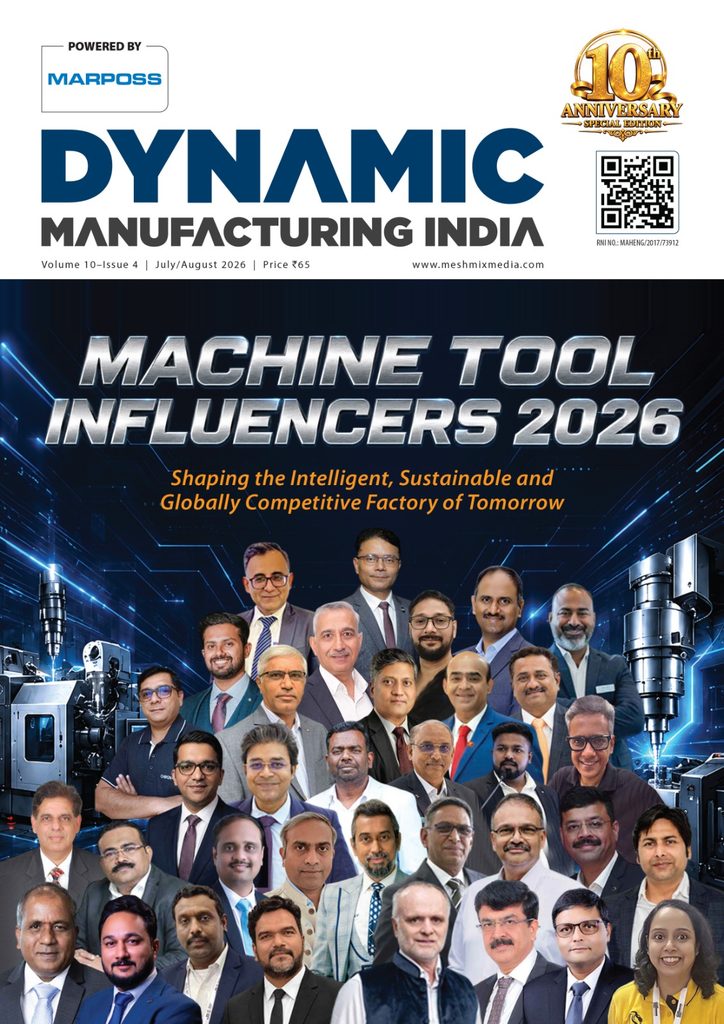
Machine Tool Influencers 2026: Varun Dev on Precision Engineering
Varun Dev, Chief Executive Officer, UCAM Pvt. Ltd., on precision engineering, multi-axis machining, automation and building technology-driven manufacturing solutions

1. Which technological trends will have the greatest impact over the next five years, and how is your organisation preparing for them?
Over the next five years, emerging sectors such as electronics, robotics and automation, and aerospace will drive demand for higher precision, faster response and more complex multi-axis machining.
At UCAM, we are preparing for these evolving requirements with technologies such as Direct Drive Rotary Tables, torque motors and high-precision multi-axis rotary tables. These solutions are designed to deliver the accuracy, speed, rigidity and dynamic performance required by next-generation applications.

Our focus is to anticipate where manufacturing is heading and build the technology to support it. Through continuous R&D and close collaboration with customers and machine-tool builders, we aim to provide solutions that enable manufacturers to adopt advanced technologies with confidence.
2. India aspires to become a global manufacturing hub. What are the biggest opportunities and challenges in achieving global competitiveness, and what changes are still required?
India’s opportunity is no longer limited to becoming a low-cost manufacturing destination; it is about becoming a reliable, technology-driven and globally trusted manufacturing partner. The increasing diversification of global supply chains is creating a strong opportunity for Indian companies, but competitiveness will ultimately depend on our ability to deliver consistent quality, precision, innovation and reliability at global standards.
The challenge is to build an ecosystem that supports this transition. Manufacturers need to invest not only in modern machinery and automation, but also in R&D, skilled talent, digital capabilities and robust supply chains. Equally important is a mindset shift—from focusing primarily on short-term cost savings to making investments that improve productivity, flexibility and long-term capability.
India has the scale, talent and entrepreneurial strength to make this transition. What is required now is greater collaboration between industry, technology providers, academia and policymakers. If we can create an environment that encourages innovation and long-term investment, India can move from being an alternative manufacturing destination to becoming a preferred global partner for advanced manufacturing.
3. How is your organisation driving innovation across manufacturing processes, customer experience, sustainability, or workforce development?
At UCAM, innovation is driven by a combination of technology, customer needs and continuous improvement. We focus on developing advanced rotary-axis and multi-axis machining solutions that help manufacturers improve productivity, accuracy and flexibility, while also integrating automation and digital connectivity to support smarter manufacturing processes.
Customer experience is equally important to us. We work closely with customers and OEMs to understand their applications and develop solutions that are practical, reliable and easy to integrate. This application-focused approach enables us to continuously improve our products and respond faster to evolving industry requirements.
We also recognise that sustainable growth depends on people. By strengthening our engineering capabilities, encouraging continuous learning and developing technical talent, we are building a workforce equipped for the future. Our goal is to create an ecosystem where technology, people and customer collaboration come together to drive meaningful and long-term innovation.
4. How do you see partnerships shaping the future of manufacturing, and what role does your organisation play in this ecosystem?
Partnerships will be a key driver of the next phase of manufacturing. As customer requirements become more complex and technology evolves rapidly, collaboration among machine builders, technology providers, automation companies and end users will be essential to create integrated, application-focused solutions.
At UCAM, we see ourselves not just as a component or machine-tool supplier, but as a technology partner. By combining our expertise in precision engineering, rotary-axis technology, automation and applications, and working closely with OEMs and industry partners, we aim to develop practical and scalable solutions that enhance productivity, flexibility and machining capability.
We believe strong partnerships are built on technical expertise, responsiveness and a clear understanding of customer needs. Our vision is to contribute to a connected manufacturing ecosystem where collaboration drives innovation, improves efficiency and helps manufacturers stay competitive in the global market.
5. Looking ahead to 2030, what will define a successful machine tool company?
By 2030, a successful machine tool company will be defined by its ability to combine precision, productivity and technological adaptability. Customers will look beyond machine performance alone and expect solutions that offer greater automation, connectivity, flexibility and efficiency while delivering consistent quality and reliability.
At UCAM, we believe success will also depend on how effectively companies understand and respond to evolving customer applications. Continuous innovation in areas such as multi-axis machining, automation, digitalisation and intelligent manufacturing will be critical, along with strong engineering capabilities and the ability to develop application-specific solutions in collaboration with customers and technology partners.
Most importantly, a successful machine tool company will be one that builds long-term customer value—not simply by supplying equipment, but by becoming a trusted technology partner. A strong global presence, responsive service, continuous innovation and the ability to anticipate industry needs will be key to remaining competitive in the manufacturing landscape of 2030.
6. What message would you like to share with the next generation of manufacturing professionals and entrepreneurs who will shape India’s industrial future?
The next generation has a unique opportunity to redefine Indian manufacturing. My advice is to build strong technical fundamentals, stay curious and develop the confidence to question existing processes and find better solutions.
At UCAM, we support young engineers through exposure to advanced technologies, R&D and real-world manufacturing challenges. We believe continuous learning and hands-on experience are essential to building future-ready talent.
India is moving towards becoming a technology creator, not just a manufacturing destination. I encourage young professionals to think globally, embrace innovation and never compromise on quality.

