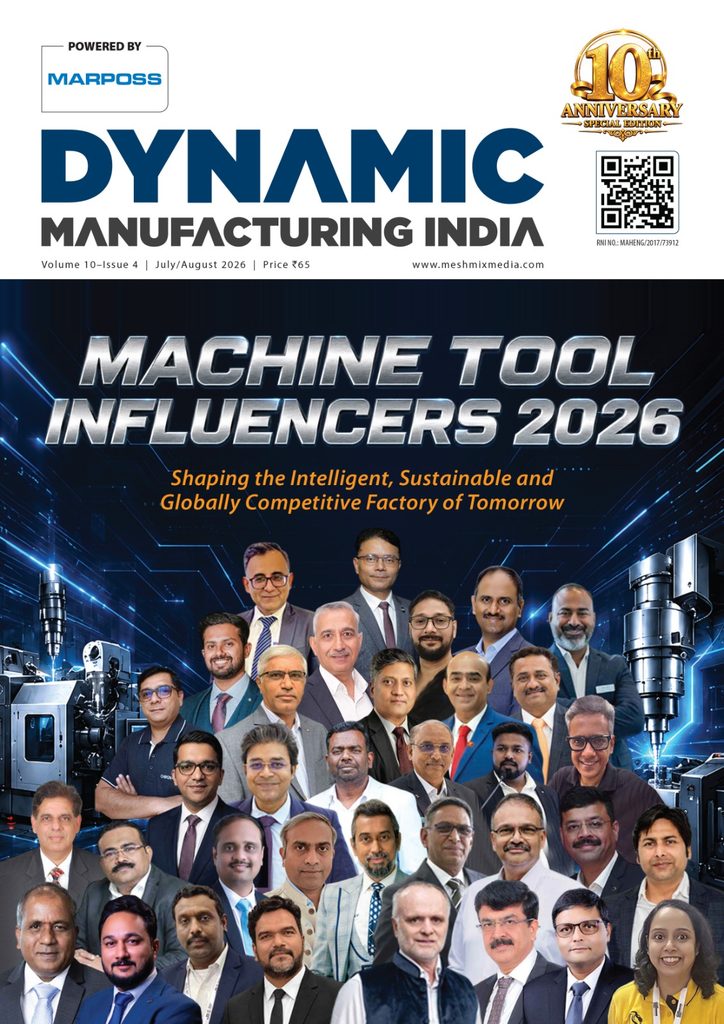
Machine Tool Influencers 2026: Vikas Kapur on Intelligent Manufacturing
Vikas Kapur, Chief Business Officer, Zavenir Daubert, on advanced manufacturing, digital transformation, sustainability and building globally competitive industrial ecosystems

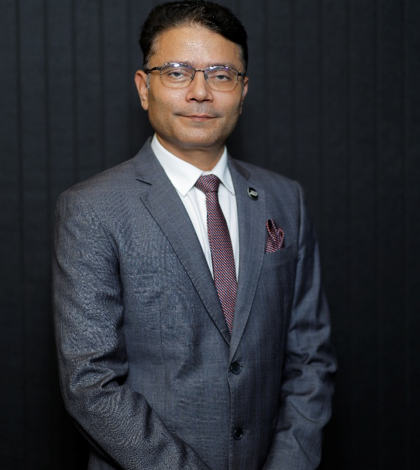
- India aspires to become a global manufacturing hub. What are the biggest opportunities and challenges for the Indian machine tool industry in achieving global competitiveness, and what changes are still required?
The biggest opportunities for India lie in reducing import dependence in aerospace, defence, semiconductor manufacturing, and electric vehicles along with developing complex, high-precision machining systems. It is a well-known fact that most multinational companies are pursuing China + strategy and India is positioned as a highly cost-effective alternate. Indian manufacturers can also leapfrog into advance technologies through fast developing hybrid additive-CNC manufacturing platforms and AI-driven predictive maintenance.
To name some of the big challenges that India faces today are, heavy reliance on imports for critical, high-value components such as CNC systems, ball screws, linear guides, and precision bearings. The Indian market remains concentrated in low-to-medium technology standard machines. The MSME sector struggles with high capital cost and limited access to credit. In addition, there is a severe shortage of trained engineers and technicians who possess the hands-on expertise required to operate, program, and maintain advanced Industry 4.0 systems.
India needs to make changes on various fronts, starting with government policies, credit lines specially designed for precision engineering MSMEs to encourage this sector to invest in high precision machinery along with R&D. Close coordination and collaboration between Indian manufacturing industry and academia to address the shortage of skilled manpower.
- Innovation today extends beyond products. How is your organisation driving innovation across manufacturing processes, customer experience, sustainability, workforce development or digital transformation?
We at Zavenir Daubert are driving innovation across multiple business pillars with an interconnected approach. Our manufacturing facility in Gurgaon, Haryana represents a cutting-edge, IoT-enabled hub designed to meet diverse business needs through a four-pronged approach. The Advanced Manufacturing Centre leverages revolutionary haptic technology to produce a wide range of globally benchmarked chemical and lubricant products with precision and efficiency; The Technology and Experience Centre, serving as an innovation hub for research, development, and customer engagement equipped with highly advanced equipment and cutting-edge facilities for corrosion testing, tribology, microscopy, and chemical analysis. From the arrival of raw materials to the dispatch of finished goods, the process is seamlessly orchestrated by Automated Storage and Retrieval Systems (ASRS). Complementing this, there is the Fulfilment Centre, which integrates lean manufacturing principles and automated warehousing systems to ensure rapid material turnaround while maximizing efficiency.
In today’s fast-paced industrial landscape, efficiency and precision are paramount. At the heart of our operations lies a sophisticated network of interconnected software solutions, seamlessly orchestrating every aspect of production, logistics, and facility management time with our Enterprise Resource Planning (ERP) software. This integration provides clear visibility and enhanced control, enabling data-driven decision-making across the organization.
At the core of our sustainability efforts is 100% solar power generation, ensuring clean, renewable energy drives every process. Complementing this, our zero effluent discharge policy and advanced water conservation systems underscore our commitment to preserving precious resources. Even our power backups are non-polluting, reflecting a holistic approach to environmental stewardship.
- Manufacturing success increasingly depends on collaboration across OEMs, suppliers, technology providers, academia and startups. How do you see partnerships shaping the future of manufacturing, and what role does your organisation play in this ecosystem?
In an era of relentless technological shifts, isolation equals obsolescence. True innovation requires an ecosystem where all stakeholders co-create. This collective approach mitigates risk, slashes costs, and dramatically speeds up product development and market entry.
Zavenir Daubert drives this collaborative ecosystem. Alongside our global tech partners—Daubert Chemical and Daubert Cromwell (USA), Zet Chemie (Germany), and Nihon Parkerizing (Japan)—we develop the advanced technologies Indian industry needs to dominate the global market. We integratevendors from day one, helping them improve their production capabilities and environmental compliances. Through our dedicated Management Trainee and Graduate Engineer Trainee programs, we bridge the university-to-industry gap, systematically cultivating tomorrow’s manufacturing and corrosion experts.
- Looking ahead to 2030, what will define a successful machine tool company? Which capabilities, technologies or leadership qualities will differentiate the industry’s future leaders?
From my perspective, a successful machine tool company will be defined by its transformation from a hardware manufacturer into a digital-first, automatic optimization and sustainable solution provider. Future leaders will differentiate themselves by moving away from standalone equipment sales and toward fully integrated, intelligent manufacturing ecosystems. We might see hybrid manufacturing units with data centric vision. Some of the differentiating technologies, where in which machines would be able to adjust the operational parameters on its own without human intervention. Digital twin ecosystem along with hybrid manufacturing units might seamlessly combine CNC, 3D printing and laser processing in a single setup.
Other changes already taking shape are, EaaS (Equipment as a service), shifting from capex model to operational expenditure. Also, some of the Green Machining Practices including machines that require minimal energy, Minimum Quantity Lubrication (MQL), and utilize highly recyclable components.
- As one of the Machine Tool Influencers 2026, what message would you like to share with the next generation of manufacturing professionals and entrepreneurs who will shape India’s industrial future?
We are already witnessing he line between hardware and software vanishing rapidly. To stay competitive, manufacturing professionals must urgently pivot their strategies in three critical areas:
Eradicate Ecosystem Silos: Move beyond traditional vendor relationships. Actively build co-development partnerships across software engineering, semiconductor manufacturing, material science, and system integration.
Monetize the Digital Thread: Treat data as your core product. Shift from purely selling physical assets to prioritizing software monetization, subscription models, and digital twins alongside traditional mechanical engineering.
Aggressively Upskill Internal Talent: Future-proof your workforce. Actively transition internal teams from traditional mechanical assembly roles into high-demand roles in software engineering, data science, and cyber-physical security.
The future of manufacturing belongs to those who build intelligent, interconnected ecosystems.
Do Visit – https://www.zavenir.com/