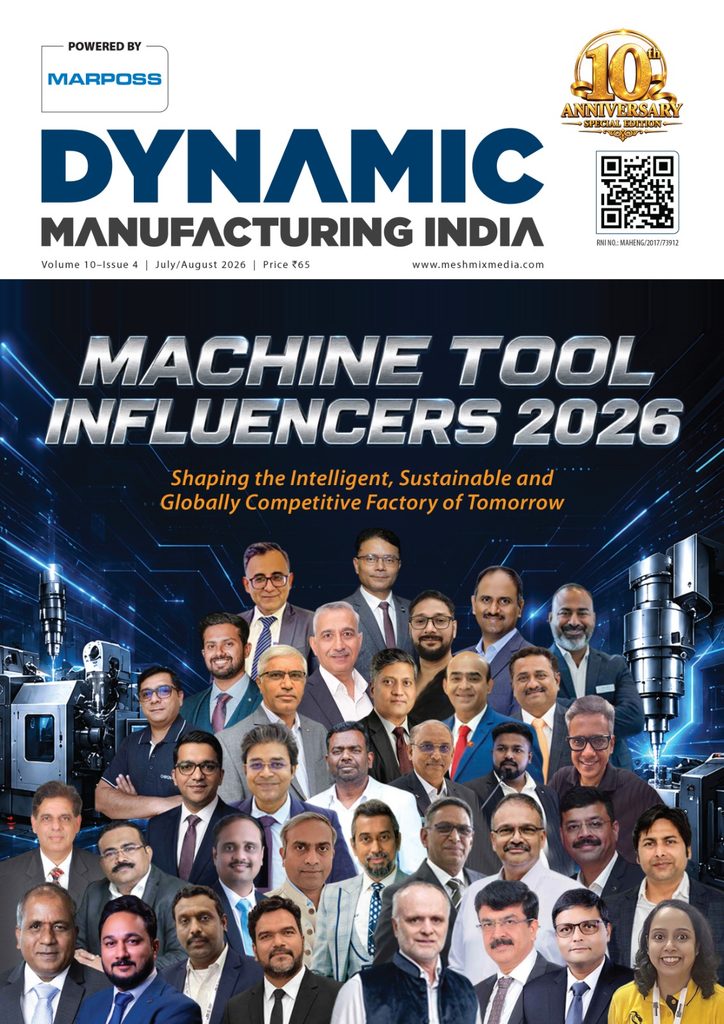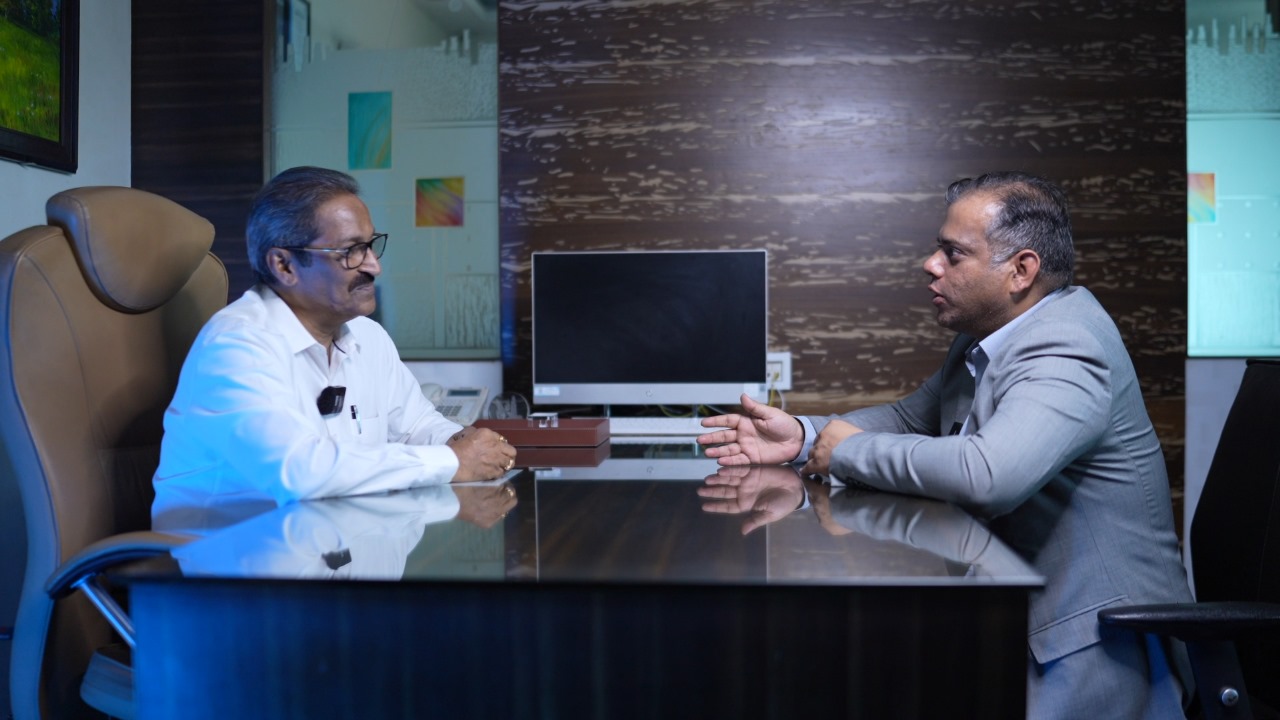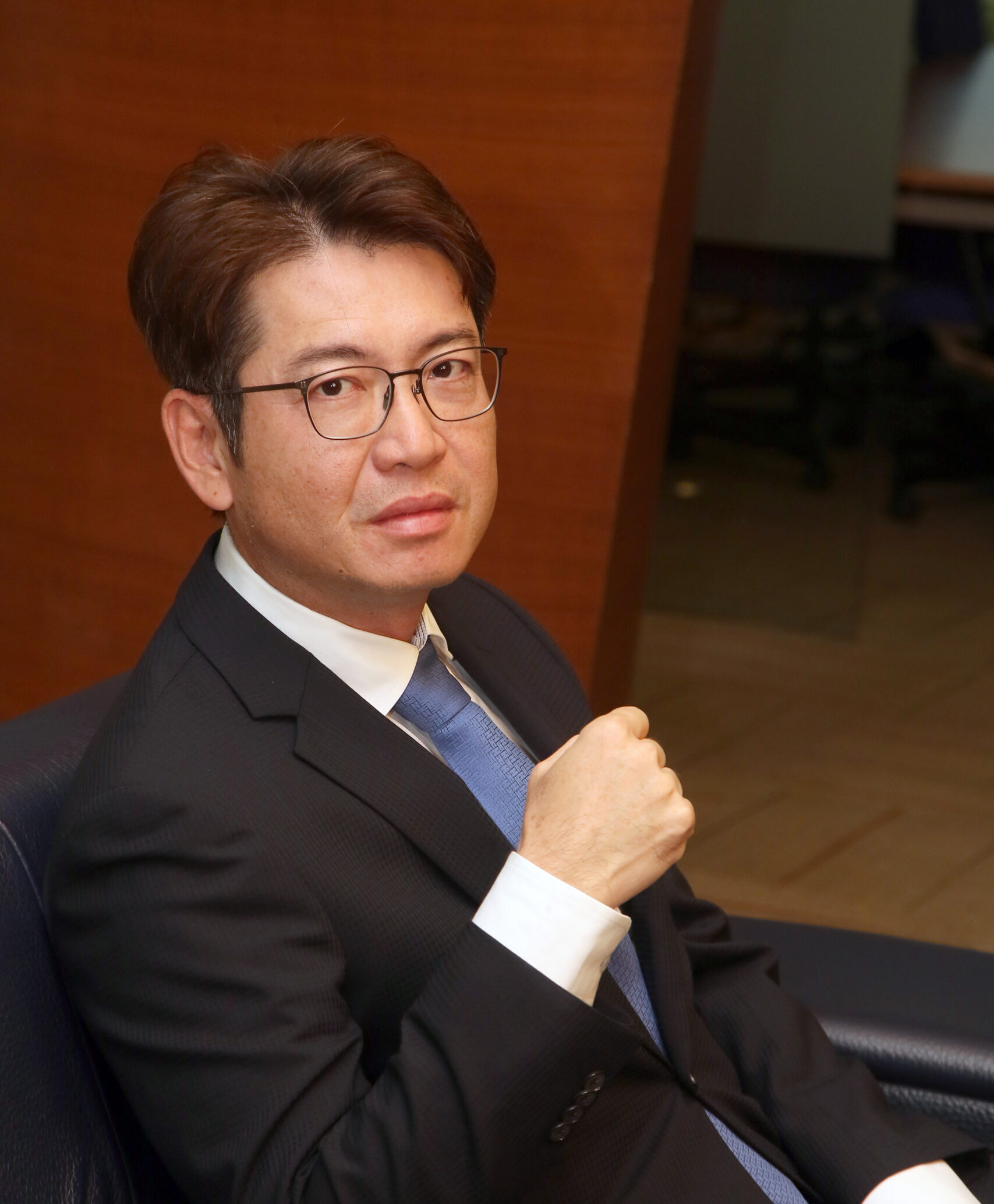
Rahul Patil, President & CEO, ISCAR India Private Limited, on precision, productivity, innovation and the capabilities that will define manufacturing leadership by 2030
From Cutting Tools to Application Intelligence: Shaping India’s Next Manufacturing Leap

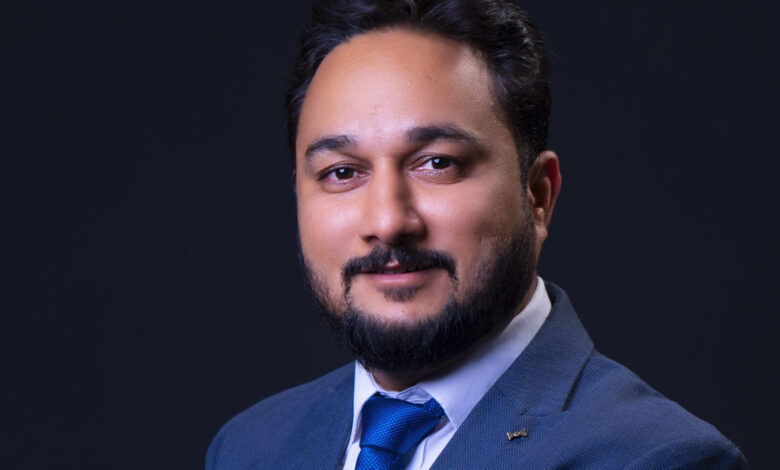
The machine tool industry is undergoing rapid transformation. Which technological trends—such as AI, automation, digital manufacturing or precision engineering—do you believe will have the greatest impact over the next five years, and how is your organisation preparing for them?
- India aspires to become a global manufacturing hub. What are the biggest opportunities and challenges for the Indian machine tool industry in achieving global competitiveness, and what changes are still required?
India’s opportunity is real and, frankly, overdue. We have the demographic advantage, a growing base of component manufacturers, and genuine government intent through schemes that reward domestic capacity building. Global OEMs are actively looking to de-risk their supply chains, and India is a natural beneficiary of that “China Plus One” recalibration.
But global competitiveness isn’t won on cost alone — it’s won on consistency, precision and speed of delivery. That’s where I think we still have ground to cover. Too many shops still treat tooling as a line-item to be minimised rather than a productivity lever to be optimised. We need wider adoption of process optimisation and application engineering — not just buying more machines but extracting more from every machine hour. We also need deeper collaboration between machine tool builders, tooling companies and end users right from the design stage of a component, rather than tooling being an afterthought. And we need a much stronger pipeline of skilled CNC programmers and process engineers — capacity is being built faster than capability, and that gap has to close.
- Innovation today extends beyond products. How is your organisation driving innovation across manufacturing processes, customer experience, sustainability, workforce development or digital transformation?
For us, innovation isn’t confined to the R&D lab — it runs through how we train customers, how we manage inventory, and how responsibly we manufacture. On the customer experience side, we’ve long believed that a tool sold without the knowledge to use it optimally is only half a solution — which is why so much of our engagement is built around training, live demonstrations and application support rather than catalogue selling.
On sustainability, our approach starts upstream — designing tools and grades that last longer and cut more efficiently directly reduces material consumption and energy use per component produced, and our manufacturing operations follow recognised environmental management standards across our global plants. On workforce development, we run structured skilling programmes for machinists and engineers, because innovation on paper means nothing if the person operating the machine doesn’t understand why a parameter change matters.
- Manufacturing success increasingly depends on collaboration across OEMs, suppliers, technology providers, academia and startups. How do you see partnerships shaping the future of manufacturing, and what role does your organisation play in this ecosystem?
No single company — however large — can carry the full weight of a manufacturing transformation alone. The future belongs to ecosystems: machine tool builders, tooling companies, control and automation providers, academic institutions and even startups working on niche process software, all contributing pieces of a larger puzzle.
We see ourselves as a connective layer in that ecosystem — working closely with machine tool manufacturers on machining trials, partnering with academic institutions to bring practical, industry-relevant training into engineering curriculum, and staying close to component manufacturers to co-develop solutions for specific, often unglamorous, real-world machining problems. Some of our best product developments over the years have come directly from a customer’s shop floor problem, not from a lab brief.
- Looking ahead to 2030, what will define a successful machine tool company? Which capabilities, technologies or leadership qualities will differentiate the industry’s future leaders?
By 2030, I don’t think the differentiator will be who has the most advanced single technology — most credible players will have access to similar hardware. The real differentiator will be application intelligence: who can turn data, materials science and process knowledge into a genuinely optimised solution for a customer’s specific part, not a generic one.
Leadership qualities will matter as much as technology. The companies that win will be led by people who are comfortable being both engineers and educators — willing to sit with a customer’s problem long enough to understand it, rather than pushing a standard catalogue answer. Agility will matter more than scale; the ability to adapt a solution quickly for a niche application will often beat having the broadest product range.
- As one of the Machine Tool Influencers 2026, what message would you like to share with the next generation of manufacturing professionals and entrepreneurs who will shape India’s industrial future?
If I could say one thing to the young engineers and entrepreneurs entering this industry, it would be this: don’t chase the machine, chase the problem. The most respected people in this industry aren’t the ones who know the most acronyms — they’re the ones who can walk up to a machining problem nobody else could solve and work through it patiently, layer by layer.
India’s industrial future isn’t going to be built by imported technology alone. It’s going to be built by engineers who are curious enough to ask, “why does this tool fail here” and stubborn enough to find out. Stay close to the shop floor, invest in understanding the fundamentals — materials, cutting mechanics, process design — and treat every failed component as data, not defeat. That mindset, more than any single technology, is what will take Indian manufacturing to where it deserves to be.
Do Visit – https://www.iscar.com/