Driving the Future of Precision Manufacturing Through Automation, Digital Intelligence and Advanced Multi-Spindle Technology
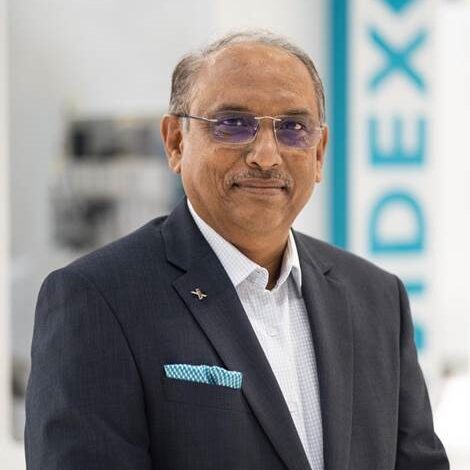
Wilson Thomas, Managing Director – INDEX Machine Tools India, on technology-led productivity, smart manufacturing and strengthening India’s global manufacturing competitiveness.

1. Which technological trends will have the greatest impact over the next five years, and how is your organisation preparing?
The future of machine tools will be shaped by few prominent trends such as Artificial Intelligence (AI), Industrial IoT, automation, digital twins, miniaturization predictive maintenance, precision engineering, and sustainable manufacturing. AI-powered analytics and connected machines will optimise machining processes, reduce downtime, and improve quality, while automation and robotics will deliver the flexibility needed for high-mix, high-volume production.
One of the key enablers of this transformation is advanced multi-spindle technology, which is redefining productivity in high-volume precision manufacturing. By performing multiple machining operations simultaneously, modern CNC multi-spindle machines significantly reduce cycle times, improve process stability and lower unit costs while maintaining exceptional accuracy.
At our organisation, we are preparing for this future scenario by investing in smart manufacturing, advanced multi-spindle machining solutions, digital connectivity, and workforce development.
Our focus is on enabling customers enhance productivity through integrated manufacturing solutions that combine precision, automation, rapid setup, and intelligent process optimisation.
2. What are the biggest opportunities and challenges for India’s machine tool industry?
India has a tremendous opportunity to become a global manufacturing hub, supported by initiatives such as Make in India, Atmanirbhar Bharat, and rapid growth in sectors like aerospace, defence, electric vehicles, electronics, semiconductors, and precision engineering.
To compete globally, however, the industry must strengthen indigenous technology development, adapt new technologies readily available, invest more in R&D, build resilient supply chains, and develop a highly skilled workforce capable of working with AI, automation, and digital manufacturing technologies. Going forward, global competitiveness will depend not only on cost but also on quality.
3. How is your organisation driving innovation beyond products?
Innovation today extends across the entire business. We are improving manufacturing processes through launching new machining solution with high productivity output and which are low on resources consumption such as power, compressed air, labour by exploiting automation and lean practices while enhancing customer experience.
Our goal is to deliver value through smarter processes, better customer engagement, and continuous improvement.
4. How will partnerships shape the future of manufacturing?
Manufacturing has become too complex for any single organisation to innovate alone. Collaboration between OEMs, suppliers, technology providers, startups, academia and research institutions will be essential for accelerating innovation and strengthening India’s manufacturing ecosystem.
Our organisation actively works with customers and technology partners to develop application-focused solutions while supporting knowledge sharing, skill development and digital transformation initiatives. Strong partnerships create faster innovation.
5. Looking ahead to 2030, what will define a successful machine tool company?
By 2030, successful machine tool companies will be recognised not only for the machines they build but for the intelligent manufacturing solutions they provide. AI-enabled systems, connected factories, automation, precision engineering, and sustainability will become standard capabilities.
Future leaders will differentiate themselves through customer-centric innovation, operational agility, digital expertise, continuous talent development and responsible leadership. Companies that combine engineering excellence with digital intelligence and a strong commitment to sustainability will be best positioned for long-term success.
6. What message would you like to share with the next generation of manufacturing professionals?
India is entering one of the most exciting phases of its manufacturing journey. The next generation has an opportunity to position the country as a global leader in advanced manufacturing.
Our message is to stay curious, embrace technology and never stop learning.
India’s future manufacturing leadership will be shaped by professionals who combine technical excellence with innovation, resilience, and a global outlook.
Do Visit – https://www.index-group.com/en/