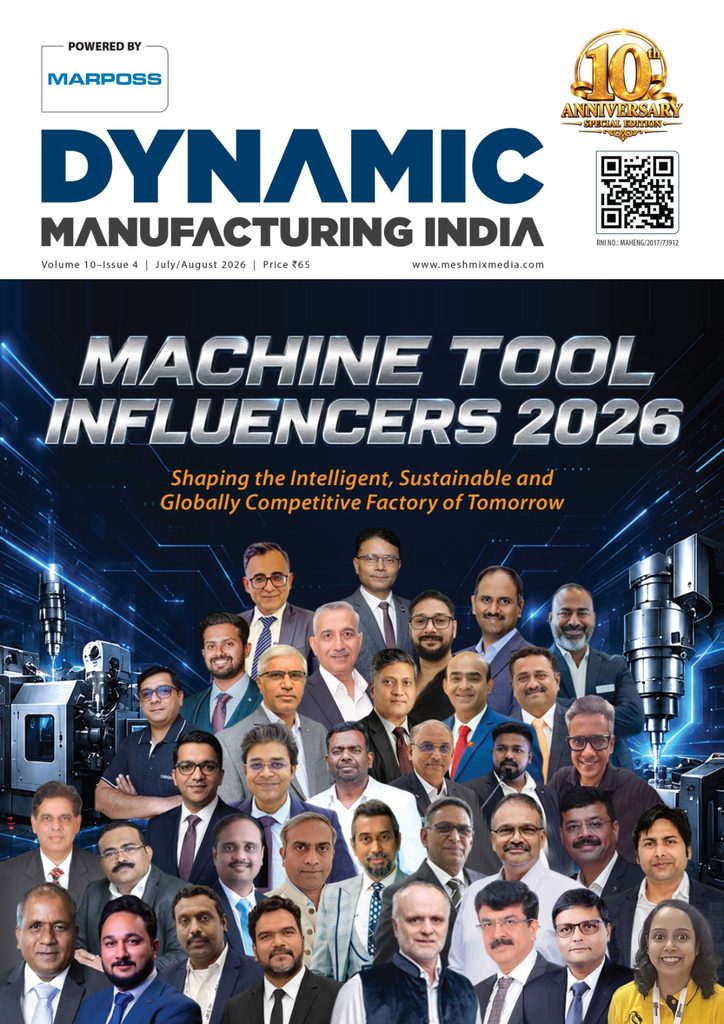
Precision, Technology and Partnership: Building India’s Globally Competitive Manufacturing Future
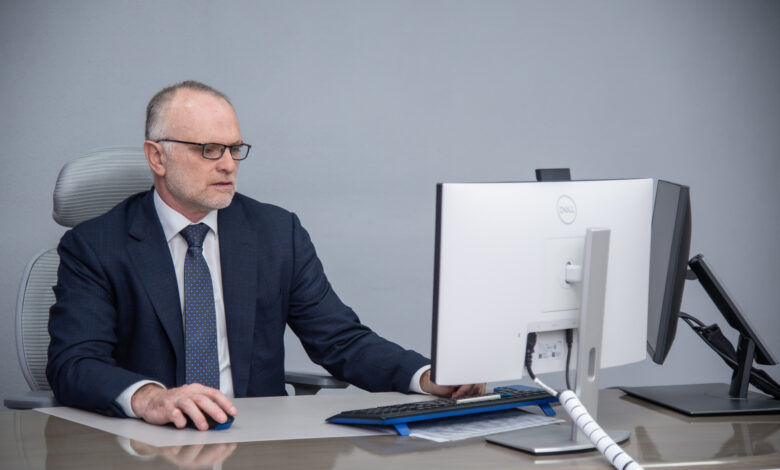
Cosimo Cereda, Managing Director, Marposs India, shares his perspective on precision engineering, digitalisation, collaboration and the technologies shaping manufacturing towards 2030.

- India aspires to become a global manufacturing hub. What are the biggest opportunities and challenges for the Indian machine tool industry in achieving global competitiveness, and what changes are still required?
India has a strong opportunity to become a global manufacturing hub, supported by a growing domestic market, engineering capabilities and sectors such as automotive, EV, aerospace, defence and Machine Tool. From my perspective, the biggest opportunity for the Indian machine tool industry is to move beyond cost competitiveness towards technology, precision, quality and productivity. At the same time, challenges remain around technology adoption, dependence on imports, skilled talent, R&D and global-quality standards. The industry needs stronger investment in automation, digitalisation, process control and advanced measurement, together with closer collaboration between machine builders, technology providers and customers.
At Marposs, we believe that precision and process control are fundamental to competitive manufacturing. By helping manufacturers improve quality, reduce waste and increase productivity, we can contribute to India’s journey from a strong manufacturing market to a globally competitive manufacturing powerhouse.
- Innovation today extends beyond products. How is your organisation driving innovation across manufacturing processes, customer experience, sustainability, workforce development or digital transformation?
At Marposs, we believe innovation is not limited to developing new products—it is about improving the entire manufacturing ecosystem. We are driving innovation through digitalisation, automation, advanced measurement and process control, helping customers improve productivity, quality and reduce waste. We are also focusing on customer experience by providing more integrated solutions and stronger technical support. Sustainability is increasingly part of our approach, particularly through technologies that help manufacturers reduce scrap, optimise processes and use resources more efficiently. At the same time, workforce development remains critical. As manufacturing becomes more digital and automated, we are investing in skills, knowledge sharing and collaboration to prepare our teams and customers for the technologies of tomorrow. For us, innovation ultimately means creating measurable value for customers while building a more efficient, sustainable and future-ready manufacturing industry.
- Manufacturing success increasingly depends on collaboration across OEMs, suppliers, technology providers, academia and startups. How do you see partnerships shaping the future of manufacturing, and what role does your organisation play in this ecosystem?
The future of manufacturing will increasingly depend on collaboration rather than working in isolation. OEMs, machine builders, technology providers, suppliers, academia and startups each bring different capabilities, and combining them can accelerate innovation.
At Marposs, we see ourselves as a technology partner within this ecosystem, working closely with machine manufacturers and end customers to understand their challenges and develop solutions that improve quality, productivity and process control.We also believe stronger collaboration with universities, research institutions and startups can help bring new technologies and skills into manufacturing faster.
For India to become a globally competitive manufacturing hub, we need an ecosystem where knowledge, technology and expertise are shared across the value chain. Partnerships will be a key enabler of that transformation.
- Looking ahead to 2030, what will define a successful machine tool company? Which capabilities, technologies or leadership qualities will differentiate the industry’s future leaders?
By 2030, a successful machine tool company will be defined by its ability to combine technology, precision, productivity and customer value. Future leaders will need strong capabilities in automation, digitalisation, AI, advanced measurement and data-driven manufacturing, while maintaining reliability and engineering excellence.
But technology alone will not be enough. Companies that understand their customers, innovate continuously and build strong global partnerships will have a clear advantage.
Leadership will also require a long-term vision, openness to collaboration and the ability to develop people and adapt quickly to change.At Marposs, we believe the leaders of tomorrow will be those who move from simply supplying equipment to becoming long-term technology and process partners for their customers.
- As one of the Machine Tool Influencers 2026, what message would you like to share with the next generation of manufacturing professionals and entrepreneurs who will shape India’s industrial future?
My message to the next generation of manufacturing professionals and entrepreneurs is simple: be ambitious, stay curious and never stop learning. India has a tremendous opportunity to build a globally competitive manufacturing ecosystem. The next generation should embrace technology, innovation and sustainability, but also remember that strong manufacturing is built on quality, discipline and engineering excellence. Be willing to collaborate, take calculated risks and think beyond the Indian market. The world is looking at India, and this generation has the opportunity not just to participate in the transformation, but to lead it.
At Marposs, we believe that the future of manufacturing belongs to those who combine technology with people, innovation with purpose, and ambition with execution.