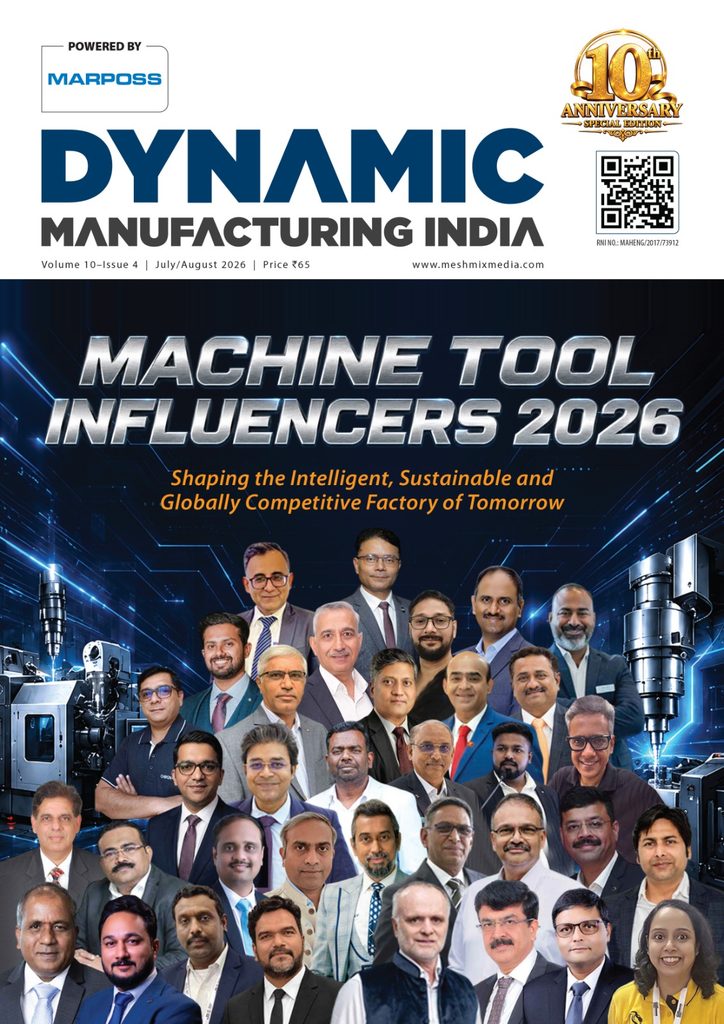
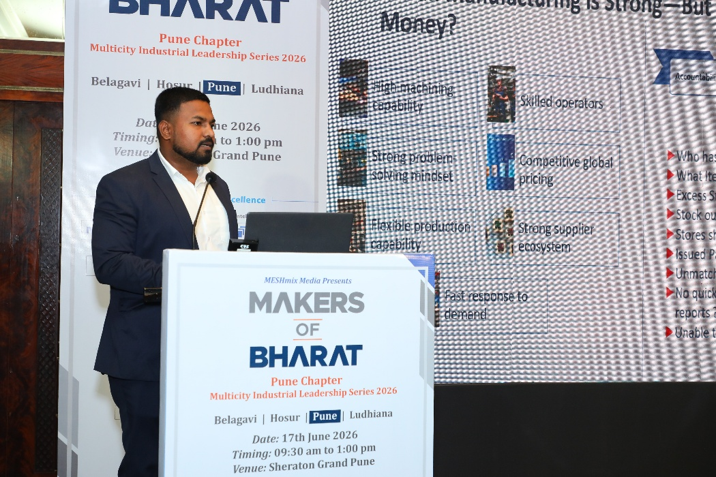
Machine Tool Influencers 2026: Nilesh Thorat on Connected Toolrooms
Nilesh Thorat, Key Account Manager – India, SupplyPoint Systems Pvt. Ltd., on connected tool management, digitalisation, AI, data-driven manufacturing and the future of smart factories

From Smart Machines to Smart Toolrooms: Building the Connected Manufacturing Ecosystem
The next phase of manufacturing will not be defined only by smarter machine tools, but by how intelligently the entire factory works together.
AI, Industrial IoT, automation, robotics and data analytics are transforming production. At the same time, manufacturers are recognising the importance of digitising the resources that support production—tools, cutting inserts, gauges, MRO items, spares and other critical consumables.
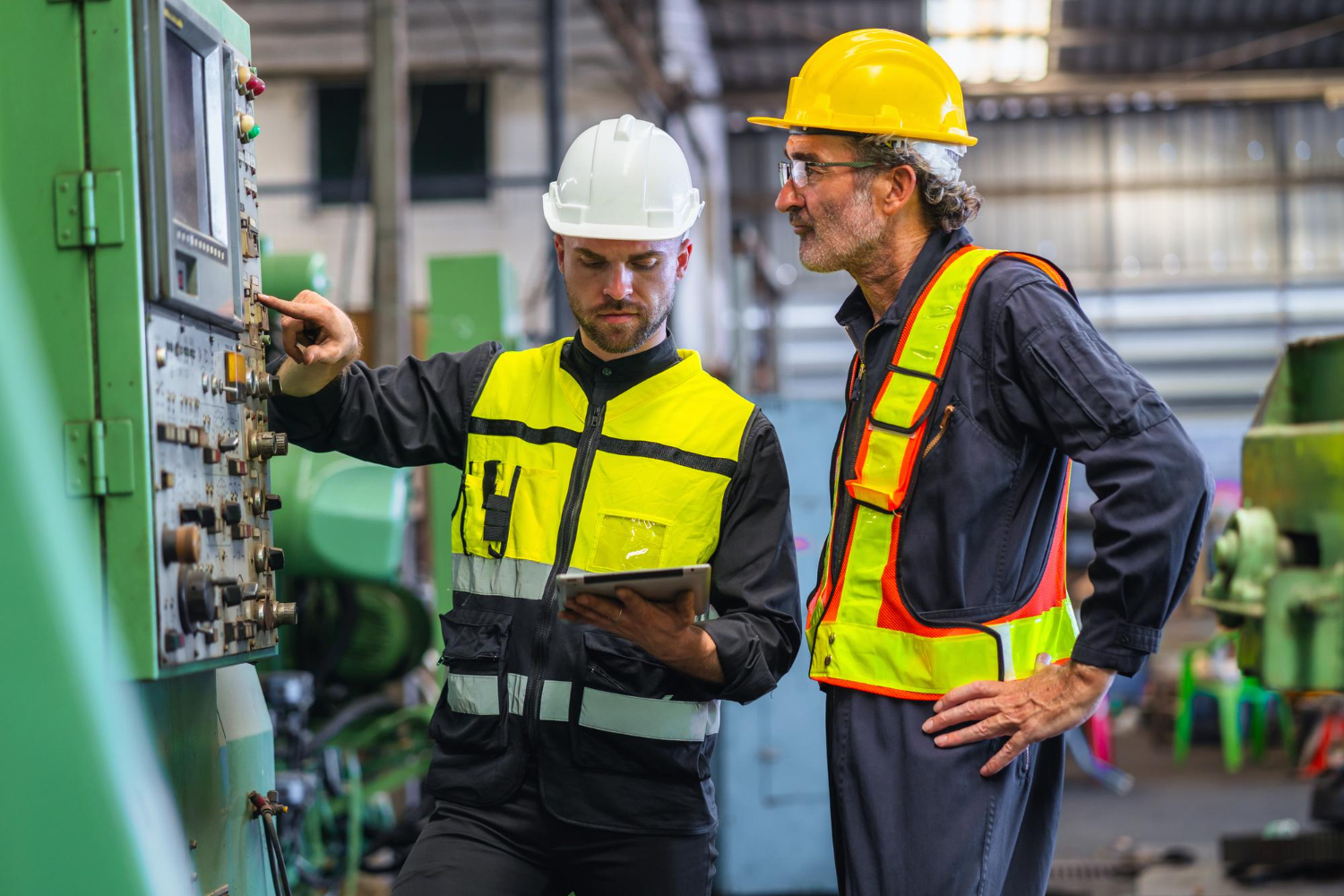
From our experience working with manufacturers, we see a clear shift from standalone automation towards connected manufacturing ecosystems, where machines, people, materials, tools and business systems work together.
At SupplyPoint, we believe the smart factory cannot stop at the machine interface. Intelligence must extend to everything that supports the machine.
1. Which technological trends will have the greatest impact over the next five years, and how is your organisation preparing for them?
The biggest impact will come from the convergence of AI, Industrial IoT, automation, connectivity and data-driven decision-making.
Manufacturers are moving from simply collecting data to using it to make better decisions. In tool management, for example, knowing what was consumed, who accessed it, where it was used and when replenishment is required can significantly improve control and productivity.
SupplyPoint is developing this connected approach through intelligent dispensing systems and digital platforms such as VendTel, enabling controlled access, traceability and improved inventory visibility.
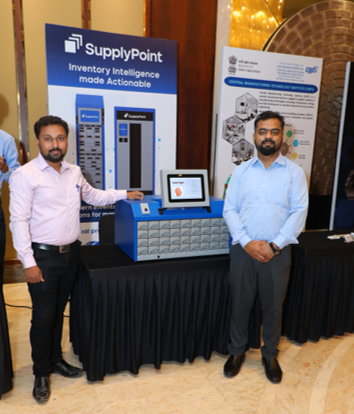
WebSync provides the connectivity and data layer that brings information from connected SupplyPoint systems together, while SupplyPointiQ provides the foundation for turning this data into meaningful analytics and actionable insights. This creates opportunities to identify consumption patterns, improve inventory planning, highlight abnormal usage and support smarter replenishment decisions.
As AI capabilities continue to develop, these connected data and analytics platforms will become increasingly important in helping manufacturers move from reactive inventory management to predictive, data-driven decision-making.
The goal is not simply automating transactions; it is enabling better decisions.
2. India aspires to become a global manufacturing hub. What are the biggest opportunities and challenges for the Indian machine tool industry?
India has a tremendous opportunity, driven by automotive, aerospace, defence, electronics, semiconductors, electric mobility and precision engineering.
However, global competitiveness requires more than advanced machine tools. Manufacturers must improve the entire production ecosystem, including tooling, maintenance, inventory, workforce productivity and data management.
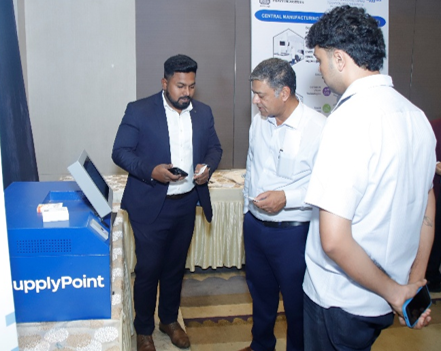
One of the biggest opportunities is to eliminate manual processes that continue to exist around highly automated production environments. A sophisticated machine can still lose productivity if the required tool is unavailable, inventory is uncontrolled or consumption cannot be traced.
India therefore needs to accelerate end-to-end digitalisation.
Connecting machines, tools, people, materials and enterprise systems will help manufacturers improve productivity, reduce waste and make faster, data-driven decisions.
India has the talent and manufacturing ambition to compete globally. The next step is building factories that are not only cost-efficient, but also connected, agile and intelligent.
3. How is your organisation driving innovation across manufacturing processes, customer experience, sustainability, workforce development or digital transformation?
For us, innovation starts with understanding the customer’s operational problem.
A manufacturer does not simply need a tool storage system. It needs to know what was issued, who accessed it, where it was used, what is available and when replenishment is required.
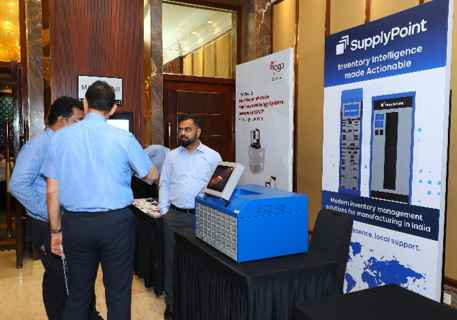
When this information becomes digital and actionable, tool management moves from a traditional storekeeping activity to a productivity and management function.
Our focus is therefore on combining physical automation with software, connectivity and data. Our dispensing technologies provide controlled access and traceability, while our digital platforms support inventory management and reporting.
Sustainability is also closely linked to better inventory control. Improved visibility can help reduce excess and obsolete stock, avoid unnecessary purchases and optimise resource utilisation.
For us, innovation is ultimately about using technology to deliver measurable improvements in productivity, control and efficiency.
4. How do you see partnerships shaping the future of manufacturing?
The factory of the future cannot be built by one company or one technology.
Machine tool OEMs, tooling companies, automation providers, software companies, ERP partners, system integrators, startups and academia will increasingly need to work together.
SupplyPoint’s role is to connect an important layer of the manufacturing ecosystem—the tools, consumables and supporting inventory—with the broader digital infrastructure of the factory.
For example, when a tool transaction is linked to a job, machine or operation, that information becomes valuable data. Connecting it with ERP, purchasing and production systems can support better planning and decision-making.
The future will therefore move from isolated solutions towards integrated ecosystems, where technologies work together to create measurable business value.
5. Looking ahead to 2030, what will define a successful machine tool company?
By 2030, successful machine tool and manufacturing technology companies will need to offer much more than physical products.
The leaders will combine engineering excellence, digital capability, connectivity, customer understanding and lifecycle support.
Technology will need to communicate with other systems, while data will need to become actionable intelligence. At the same time, customer expectations will shift from simply buying equipment towards working with technology partners who continuously improve productivity and efficiency.
Human capability will remain equally important. Future manufacturing professionals will need to combine engineering knowledge with digital skills, analytical thinking and problem-solving ability.
Ultimately, the companies that succeed will understand that digital transformation is not about adding technology—it is about creating better outcomes.
6. What message would you like to share with the next generation of manufacturing professionals and entrepreneurs?
My message is simple:
Do not look at manufacturing only as an industry of machines. Look at it as an industry of possibilities.
Learn how machines work, but also understand data. Understand production, but also understand software. Most importantly, develop the ability to identify problems and use technology to solve them.
India has a tremendous opportunity to become a global centre for advanced, intelligent and sustainable manufacturing.
That journey will require engineers, entrepreneurs and leaders who are willing to challenge traditional processes and continuously ask:
“Can we do this better?”
The future of manufacturing will be built by people, machines, software, data and ideas working together.
And that future has already begun.
Do Visit – https://supplypoint.com/