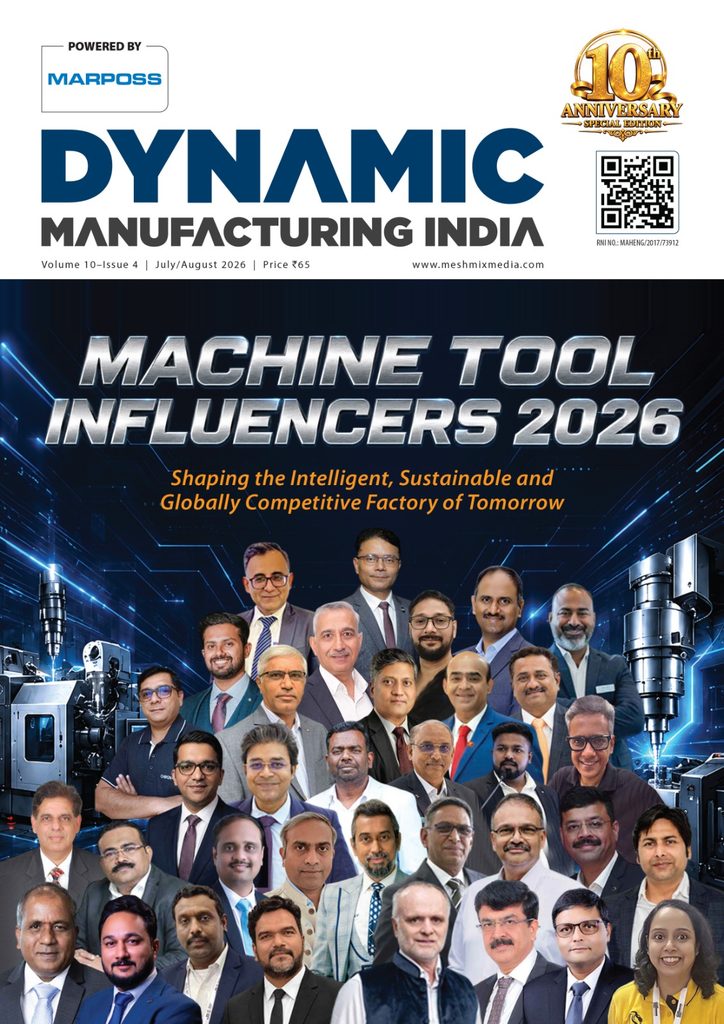
Machine Tool Influencers 2026: Raghavendra Naik on CNC & Automation
Raghavendra Naik, Director, Syntec Technology India Pvt. Ltd., on AI-driven manufacturing, CNC and motion technologies, automation, digitalisation and building technologies for the world

1. The machine tool industry is undergoing rapid transformation. Which technological trends—such as AI, automation, digital manufacturing or precision engineering—do you believe will have the greatest impact over the next five years, and how is your organisation preparing for them?
Over the next five years, I believe AI-driven manufacturing, automation, digitalisation and advanced motion/precision technologies will have the greatest impact on the machine tool industry.
AI will increasingly move from being an analytical tool to becoming part of the machine itself—supporting predictive maintenance, process optimisation, tool-life management, energy optimisation and intelligent decision-making. At the same time, automation through robots, machine tending, inspection and material handling will become essential as manufacturers face increasing pressure on productivity and skilled manpower.
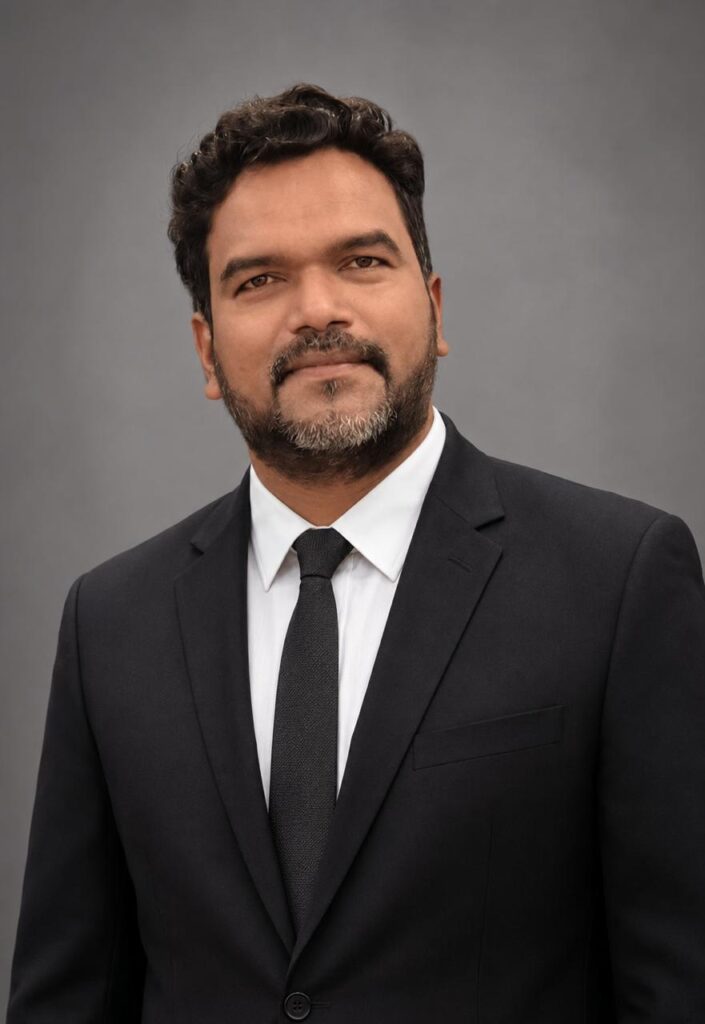
At Syntec, we are preparing by strengthening our capabilities across CNC, servo, robotics, laser solutions and digital manufacturing. Our focus is not only on supplying individual products but on developing integrated automation solutions that improve machine productivity, reliability and ease of use. We are also investing in technical training and application engineering so that our team can support customers through this transition.
2. India aspires to become a global manufacturing hub. What are the biggest opportunities and challenges for the Indian machine tool industry in achieving global competitiveness, and what changes are still required?
India has a tremendous opportunity because of the growth of automotive, EVs, electronics, aerospace, defence, renewable energy and general engineering. The next phase of India’s manufacturing growth will create significant demand for high-productivity and high-precision machine tools.
However, global competitiveness requires more than competitive pricing. Indian machine tool companies need to improve technology, precision, productivity, reliability, automation, quality consistency and after-sales support.
We also need a stronger domestic ecosystem for critical components such as drives, motors, control systems, precision mechanical components, sensors and advanced manufacturing technologies. Greater collaboration between industry and academia is required to develop these capabilities locally.
India should move from the mindset of “Make in India” to “Design, Develop and Make in India for the World.” That will be the key to becoming a truly global manufacturing base.
3. Innovation today extends beyond products. How is your organisation driving innovation across manufacturing processes, customer experience, sustainability, workforce development or digital transformation?
At Syntec, we look at innovation from the customer’s complete manufacturing perspective rather than only from the product perspective.
Our approach is to combine CNC control, servo technology, robotics, laser solutions and automation to help customers improve productivity and reduce manufacturing complexity. We are also strengthening our local service and application capabilities so that customers receive faster troubleshooting, technical support and training.
Workforce development is another important area. We believe technology adoption will only be successful when engineers and operators have the right skills. Therefore, we are focusing on technical training, troubleshooting SOPs, OEM training and application engineering capability development.
For us, innovation ultimately means helping customers achieve higher productivity, better quality, lower downtime and a faster return on investment.
4. Manufacturing success increasingly depends on collaboration across OEMs, suppliers, technology providers, academia and startups. How do you see partnerships shaping the future of manufacturing, and what role does your organisation play in this ecosystem?
The future of manufacturing will be built through ecosystems rather than individual companies.
No single organisation can develop every technology required for modern manufacturing. OEMs understand the production process, machine builders understand applications, technology companies bring automation and digital capabilities, suppliers provide specialised components, while academia and startups contribute new ideas and technologies.
Syntec’s role is to act as a technology partner and system enabler for Indian machine builders and manufacturers. We work closely with OEMs to understand their applications and develop customised CNC and automation solutions. We also see significant opportunities to work with educational institutions to develop practical manufacturing skills and expose students to real industrial technologies.
Going forward, stronger industry-academia-startup collaboration will be critical for creating India’s next generation of manufacturing technologies and talent.
5. Looking ahead to 2030, what will define a successful machine tool company? Which capabilities, technologies or leadership qualities will differentiate the industry’s future leaders?
By 2030, a successful machine tool company will not be defined simply by the number of machines it sells. It will be defined by technology capability, productivity delivered to customers, reliability, service responsiveness and the strength of its ecosystem.
The future leaders will combine:
* Advanced CNC and motion-control technology
* AI and digital manufacturing
* Robotics and flexible automation
* High precision and process capability
* Energy-efficient and sustainable manufacturing
* Strong application engineering
* Fast and dependable after-sales service
* Local R&D and product development
* Strong partnerships with OEMs and technology providers
* Continuous workforce development
Leadership will also need to become more customer-centric, technology-driven and collaborative. Companies that continuously learn, adapt and invest in people will have a significant advantage.
6. As one of the Machine Tool Influencers 2026, what message would you like to share with the next generation of manufacturing professionals and entrepreneurs who will shape India’s industrial future?
My message to the next generation is simple: Do not limit yourself to operating technology—learn to create it, improve it and apply it to solve real manufacturing problems.
India has an extraordinary opportunity over the next decade. We have a large engineering talent pool, a growing domestic market and increasing global confidence in India’s manufacturing capabilities.
Young professionals should develop a combination of technical knowledge, practical shop-floor experience, digital skills and entrepreneurial thinking. Entrepreneurs should focus not only on competing on cost, but on building products and technologies that can compete globally on quality, reliability and innovation.
Most importantly, we should have the confidence to build technologies in India for the world.
India should not only become the factory of the world; we should aim to become one of the technology creators for the world’s factories.