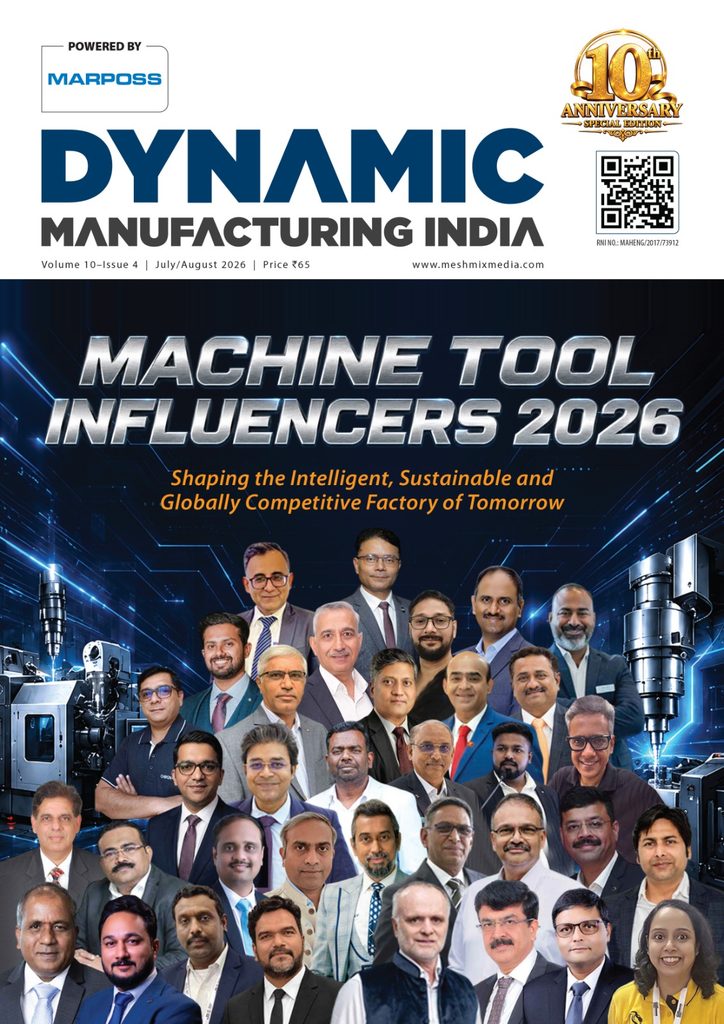
Machine Tool Influencers 2026: Dr. Arvind Patel on Intelligent Manufacturing
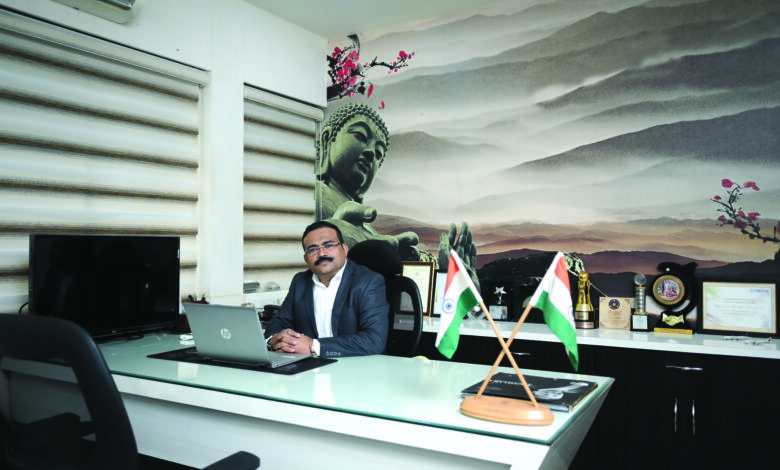
– Dr. Arvind Patel, Founder & CEO, Valgro India Ltd., on intelligent manufacturing, process innovation, automation and building globally competitive technologies from India

1. Which technologies do you believe will redefine manufacturing over the next five years?
The next five years will see manufacturing move decisively from machine-centric production to intelligent, connected and process-driven manufacturing. Artificial Intelligence, Industrial IoT, robotics, machine vision, digital twins, predictive maintenance and real-time process monitoring will increasingly become part of mainstream manufacturing.
From Valgro’s perspective, the biggest transformation will come when these technologies are integrated into practical shop-floor applications. A machine will no longer be evaluated only by its speed or output; manufacturers will increasingly expect it to provide information about process consistency, life, machine health, quality parameters, energy consumption and productivity.
In surface preparation, deburring and finishing, this shift is particularly important. These processes have traditionally depended heavily on manual skills and operator judgement. The future lies in converting this experience into controlled, repeatable and measurable processes through automation, intelligent controls and data.
The real manufacturing revolution will therefore not be about adopting one technology, it will be about connecting machines, people, processes and data into one intelligent manufacturing ecosystem.
2. How can Indian manufacturing strengthen its global competitiveness?
India has a tremendous opportunity to become one of the world’s most important manufacturing hubs, but global competitiveness cannot be built on cost advantage alone. We must compete on quality, productivity, consistency, engineering capability, delivery reliability and innovation.
At Valgro, we believe Indian manufacturers need to move from simply “Make in India” towards “Engineered in India, Innovated in India and Compete Globally.”
This requires greater investment in R&D, automation, process standardisation, skilled manpower and internationally benchmarked quality systems. Indian machine manufacturers must also develop a deeper understanding of customer applications rather than simply supplying equipment.
For example, the objective is not merely to sell a deburring or finishing machine. The objective is to understand the customer’s material, component geometry, required surface finish, production volume and downstream process, and then engineer the right solution around that requirement.
When Indian companies consistently combine application knowledge, engineering, service support, competitive cost and innovation, India can become not only a global manufacturing destination but also an important exporter of manufacturing technology.
3. How should machine tool companies think about innovation beyond the product itself?
Innovation must extend far beyond adding features to a machine. The next generation of manufacturing companies must innovate across the entire customer value chain—from application engineering and machine design to manufacturing, installation, service, digital support, energy efficiency and lifecycle management.
At Valgro, we increasingly look at innovation from a process perspective rather than only a product perspective. The question is not simply, “How can we build a better machine?” but rather, “How can we help the customer achieve a better outcome?”
That could mean reducing manual operations, improving surface consistency, lowering consumable consumption, reducing rejection and rework, improving operator safety, simplifying machine operation or making maintenance more predictable.
Sustainability is also becoming an important part of this thinking. A sustainable manufacturing solution should optimise energy, consumables, manpower and material utilisation while extending machine and component life wherever possible.
Ultimately, innovation should be measured by the value it creates on the customer’s shop floor.
4. How important will collaboration be in shaping the future of manufacturing?
No single organisation can independently develop every technology required for the next manufacturing revolution. The future will therefore be built through collaborative manufacturing ecosystems involving machine OEMs, component suppliers, automation companies, software providers, research institutions, universities, start-ups and customers.
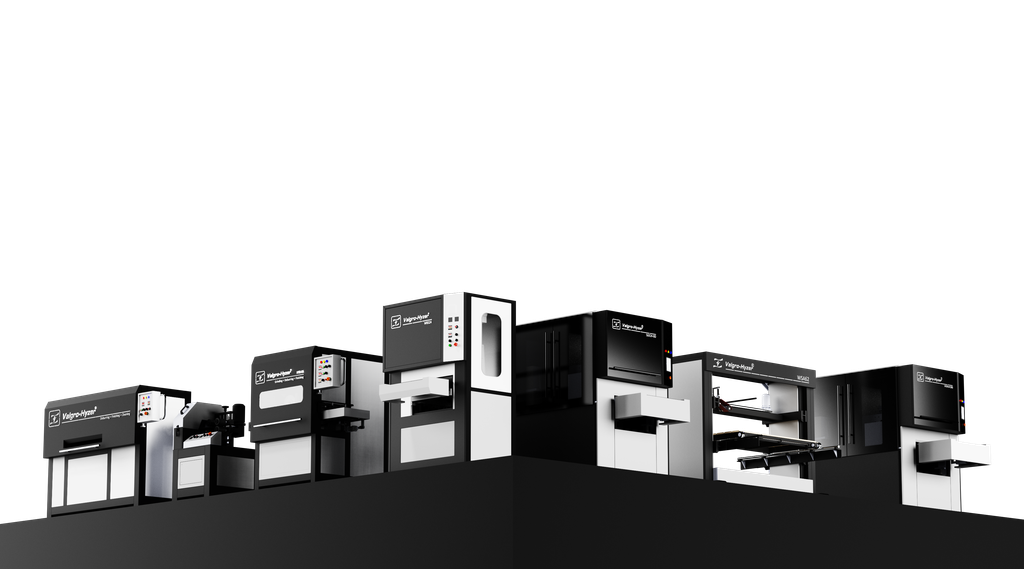
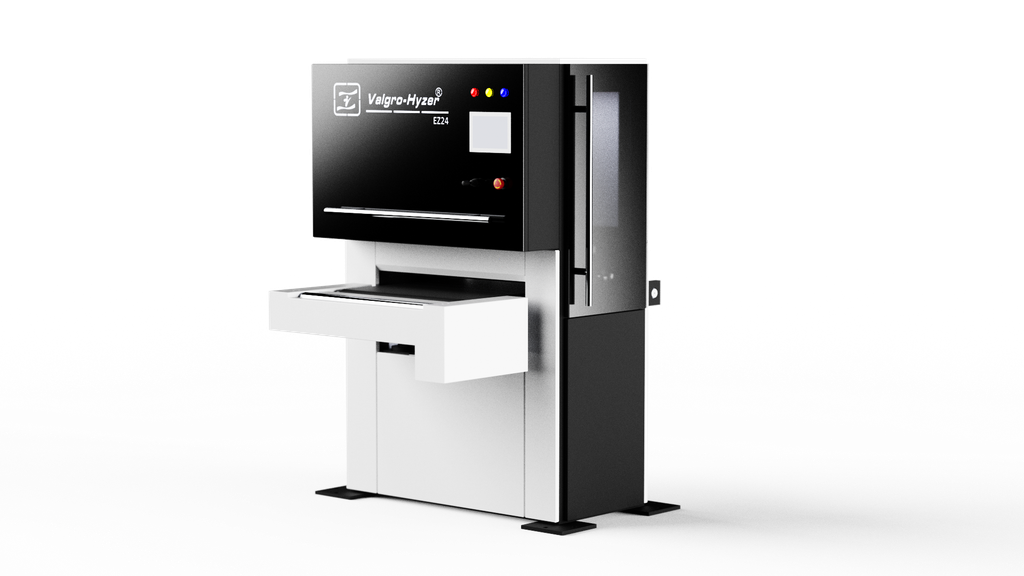
For machine manufacturers as Valgro, collaboration allows us to combine our core expertise in surface engineering and finishing processes with complementary technologies such as robotics, machine vision, sensors, controls and industrial software.
Customers themselves are also becoming important innovation partners. Some of the best engineering developments begin with a difficult application or an unresolved production problem presented by a customer.
India has enormous engineering talent across established industries, MSMEs, universities and start-ups. If we create stronger mechanisms for these groups to work together, we can significantly shorten the journey from idea to prototype to industrial-scale solution.
The companies that succeed in the future will not necessarily be those that try to develop everything internally, but those that build the strongest technology and knowledge ecosystems around their customers.
5. What characteristics will define successful machine tool companies by 2030?
By 2030, successful machine tool companies will have to be much more than equipment manufacturers. They will need to become technology, application and lifecycle partners to their customers.
Five capabilities will be particularly important: strong application engineering, continuous R&D, digital integration, global-quality manufacturing and dependable after-sales support.
Machines will increasingly be expected to communicate, generate useful production data, integrate with factory systems and support preventive or predictive maintenance. At the same time, customers will demand higher productivity, shorter lead times, greater flexibility and lower total cost of ownership.
However, technology alone will not create successful companies. Organisations will also need a culture of speed, accountability, continuous improvement and customer-centric engineering.
At Valgro, we see the future as a transition from selling machines to delivering manufacturing outcomes. Companies capable of combining engineering knowledge, intelligent technology, operational excellence and long-term customer support will define the next generation of the machine tool industry.
6. What advice would you give to the next generation of manufacturing professionals and entrepreneurs?
Our advice to young professionals and entrepreneurs is simple: understand the shop floor before trying to transform it.
Manufacturing is becoming increasingly digital, but strong fundamentals in materials, processes, machines, quality and application engineering will remain essential. AI and automation are powerful tools, but their greatest value comes when they are applied to genuine industrial problems.
Young engineers should spend time with machines, operators, production teams and customers. Observe where productivity is being lost, where quality varies, where manual intervention is excessive and where existing technologies fail to solve the problem. These challenges often represent the greatest opportunities for innovation.
At the same time, the next generation should think globally from the beginning. Indian engineers and entrepreneurs should not restrict themselves to replicating technologies developed elsewhere. We have the talent and manufacturing ecosystem to design, engineer and build globally competitive industrial technologies from India.
The next manufacturing revolution will reward people who can combine engineering fundamentals with digital intelligence, curiosity, sustainability and the courage to solve difficult problems.
For us at Valgro, the ambition is clear: contribute to a future where India is recognised not only as a country that manufactures for the world, but as a country that develops manufacturing technologies for the world.
Do Write – https://valgroindia.com/