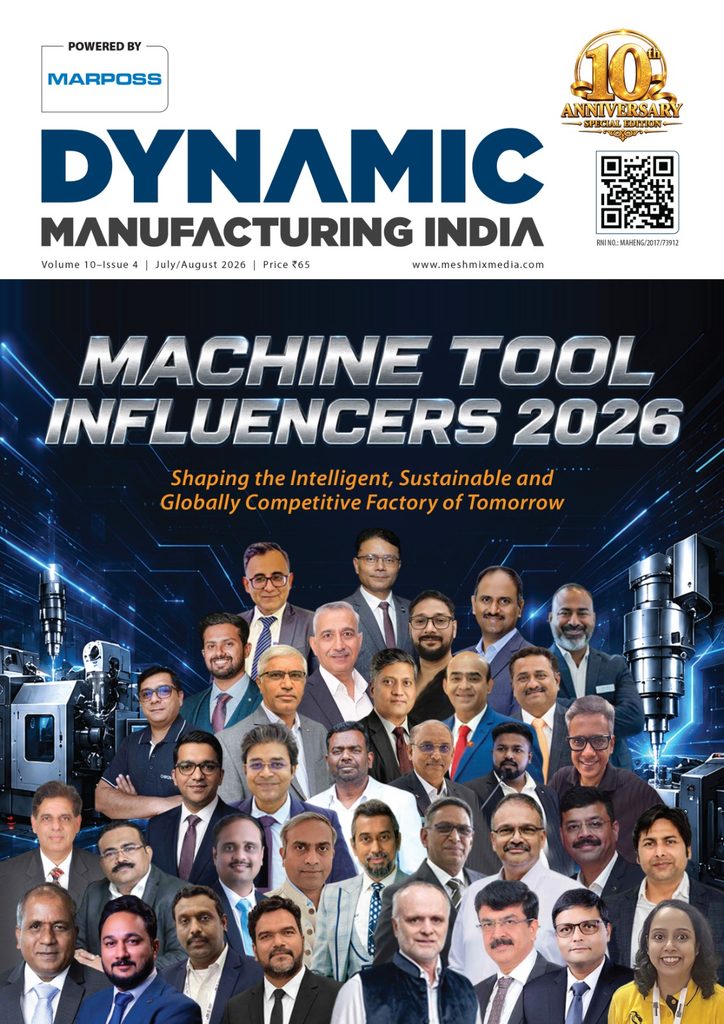
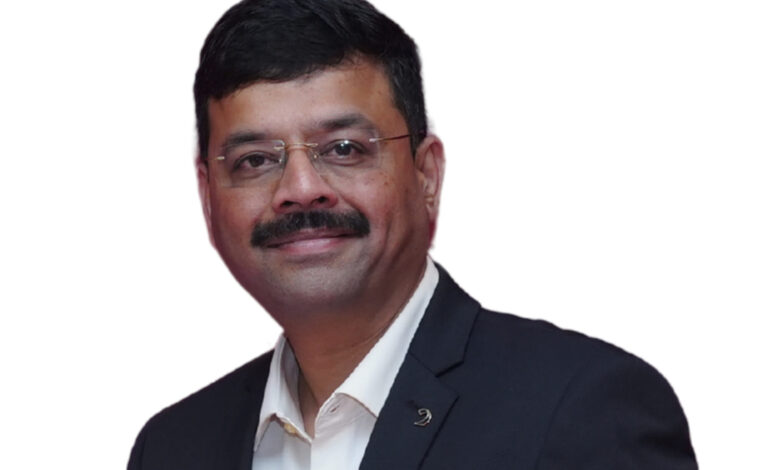
Sharad Kulkarni, Director – Sales Asia, Dormer Pramet India, on innovation, ecosystem collaboration, talent and building a world-class manufacturing industry
India’s Manufacturing Ambition: From Cost Advantage to Global Competitiveness

- India aspires to become a global manufacturing hub. What are the biggest opportunities and challenges for the Indian machine tool industry in achieving global competitiveness, and what changes are still required?
India’s ambition to become a global manufacturing hub is strongly linked to the development of a robust and future-ready machine tool industry. A strong domestic machine tool ecosystem is a critical enabler for Indian manufacturers to enhance productivity, quality, consistency and cost competitiveness. As India expands into high-precision and technology-intensive sectors such as aerospace, defence, electronics, semiconductors, medical devices and advanced engineering, the demand for reliable, accurate and intelligent machine tools will continue to grow.
The biggest opportunity lies in India’s expanding manufacturing base, increasing focus on localisation, and the growing need for advanced machining solutions. However, global competitiveness will require the industry to move beyond cost advantage and focus on innovation, precision, automation, service capability and long-term reliability. The machine tool industry must work closely with the cutting tool industry, technology providers and end users to create a complete manufacturing ecosystem that supports world-class output.
To achieve this, Indian machine tool companies need to invest more consistently in R&D, design capabilities, talent development and adoption of emerging technologies such as AI, Industrial IoT, digital twins, automation and data-driven manufacturing. Equally important is the need to build stronger quality systems, improve after-sales support, develop global supply chain capabilities and create products that meet international performance standards. In short, India needs a machine tool industry that is innovative, technology-driven and deeply aligned with the evolving needs of modern manufacturing.
- Innovation today extends beyond products. How is your organisation driving innovation across manufacturing processes, customer experience, sustainability, workforce development or digital transformation?
Innovation today is no longer limited to products; it influences every function and process within an organisation. In manufacturing, our focus is on building lean, efficient and agile operations by eliminating waste, driving continuous improvement and using a data-driven approach to identify gaps and improve performance. Increasingly, technologies such as AI, automation, Industrial IoT and advanced analytics are helping us make manufacturing processes more predictive, responsive and efficient.
Sustainability is another important pillar of innovation. The journey towards carbon neutrality requires a strong focus on circularity, energy conservation, responsible use of resources and reduction of environmental impact across the value chain. At the same time, the safety and well-being of our people remain non-negotiable and central to how we define sustainable progress.
Customer experience is also an area where innovation plays a vital role. We continuously work on strengthening feedback loops to ensure that every customer touchpoint creates a positive, reliable and value-adding experience. Here again, data, digital tools and a proactive, responsive team are critical in understanding customer needs, improving service quality and building long-term partnerships.
At the centre of all innovation are our people. In a competitive yet attractive market, it is people who make the real difference. A strong organisational culture, clear core values, a well-communicated strategic vision, openness to new ideas, focus on individual development and opportunities for career advancement are all important elements in building a future-ready workforce. Digital transformation is therefore not treated as a separate initiative, but as something deeply woven into our thinking, culture and operating processes.
- Manufacturing success increasingly depends on collaboration across OEMs, suppliers, technology providers, academia and startups. How do you see partnerships shaping the future of manufacturing, and what role does your organisation play in this ecosystem?
Manufacturing success increasingly depends on the ability of the entire ecosystem to come together around clearly defined challenges and opportunities. No single organisation can solve the complex requirements of modern manufacturing in isolation. OEMs, suppliers, technology partners, startups and academia all bring unique strengths, capabilities and perspectives. When these stakeholders collaborate with a shared purpose, they can create practical, scalable and innovative solutions that benefit the entire value chain.
Partnerships will play a decisive role in shaping the future of manufacturing, especially as industries move towards higher precision, greater automation, digital integration, sustainability and global competitiveness. For India, the real opportunity lies in combining our inherent strengths—such as engineering talent, entrepreneurial energy, cost competitiveness and a growing domestic market—with global best practices, advanced technologies and stronger ecosystem collaboration. At the same time, we must collectively address limitations related to technology depth, skill development, quality consistency, supply chain maturity and innovation capability.
Our organisation sees itself as an active contributor to this ecosystem. We work closely with customers, machine tool builders, technology providers and industry partners to understand real manufacturing challenges and co-create solutions that improve productivity, quality and competitiveness. By bringing application knowledge, technical expertise, customer insights and a collaborative mindset, we aim to support the broader vision of building a stronger, more self-reliant and globally competitive manufacturing sector. In many ways, manufacturing success is central to the vision of a Viksit Bharat, and achieving it will require all stakeholders to work together with openness, speed and a long-term commitment to innovation.
- Looking ahead to 2030, what will define a successful machine tool company? Which capabilities, technologies or leadership qualities will differentiate the industry’s future leaders?
Looking ahead to 2030, a successful machine tool company will be defined not only by the technology it offers, but by its ability to deeply understand customer needs, anticipate industry shifts and build solutions that are relevant, reliable and future-ready. Technology will undoubtedly be a key differentiator—especially in areas such as automation, AI, digital manufacturing, precision engineering, connectivity and data-driven performance—but technology alone will not be enough.
The future leaders of the industry will be those who can take a holistic view of their capabilities, build clear long-term roadmaps and execute them with focus, speed and passion. They will need to continuously invest in innovation, R&D, quality systems, application knowledge, service capability and talent development. Equally important will be the ability to nurture future-ready teams that are curious, adaptable, customer-focused and capable of working across technologies and markets.
For Indian machine tool companies, the aspiration should not be limited to success in the domestic market. The real benchmark should be the ability to compete globally and position India as a credible technology and manufacturing powerhouse.
Companies that can build world-class products, deliver consistent performance, create strong global partnerships and earn the confidence of international customers will help strengthen India’s industrial image and attract greater investment into the country.
By 2030, the most successful machine tool companies will be those that combine advanced technology with strong leadership, disciplined execution, customer intimacy, global ambition and a deep commitment to talent and innovation.
- As one of the Machine Tool Influencers 2026, what message would you like to share with the next generation of manufacturing professionals and entrepreneurs who will shape India’s industrial future?
India’s journey towards becoming a developed economy is closely linked to its ability to become a strong and globally competitive manufacturing economy. We already have many of the right ingredients in place—a large domestic consumption market, favourable demographics, an aspirational middle class, strong capital markets that can attract investment, and a highly capable professional workforce. These strengths create a tremendous opportunity for India to emerge as a global manufacturing powerhouse.
My message to the next generation of manufacturing professionals and entrepreneurs is to believe strongly in the vision of Make in India, but also to support that belief with innovation, resilience and disciplined execution. We must focus on building capabilities in technology, quality, productivity, sustainability and global competitiveness. Aspiration alone will not be enough; we need consistent action, collaboration and the courage to create products and solutions that can compete with the best in the world.
There is a significant opportunity ahead of us, and it would be unfortunate if we do not seize it fully. Let us all “care for the manufacturing industry,” which is also the purpose of our company, Dormer Pramet, and nurture it with passion, commitment and long-term thinking. If we work together with a shared vision, India can elevate its manufacturing sector to a truly world-class level within the next decade.
Do Visit – https://www.dormerpramet.com/