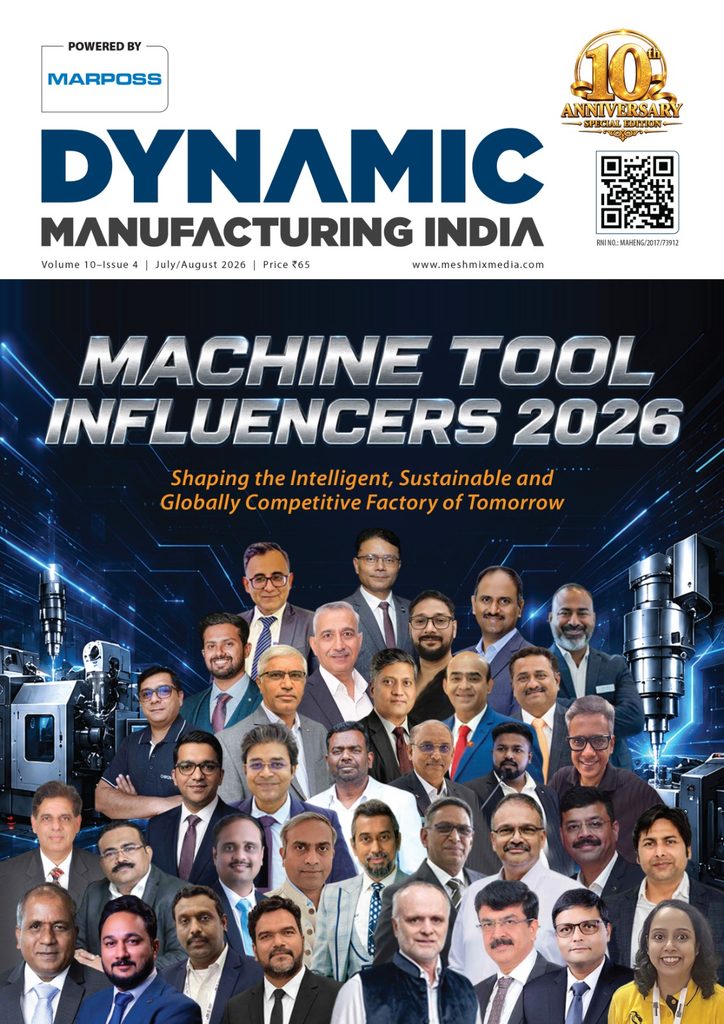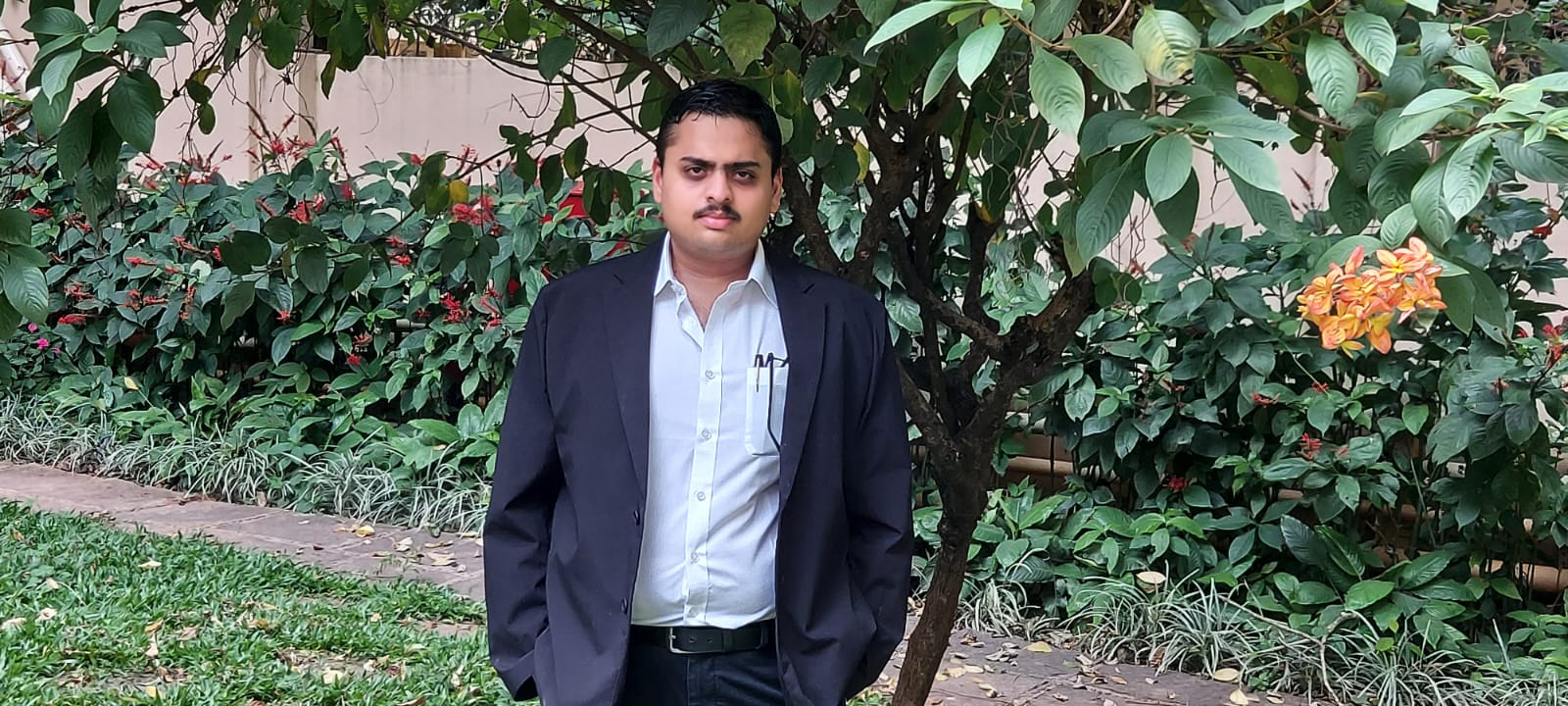
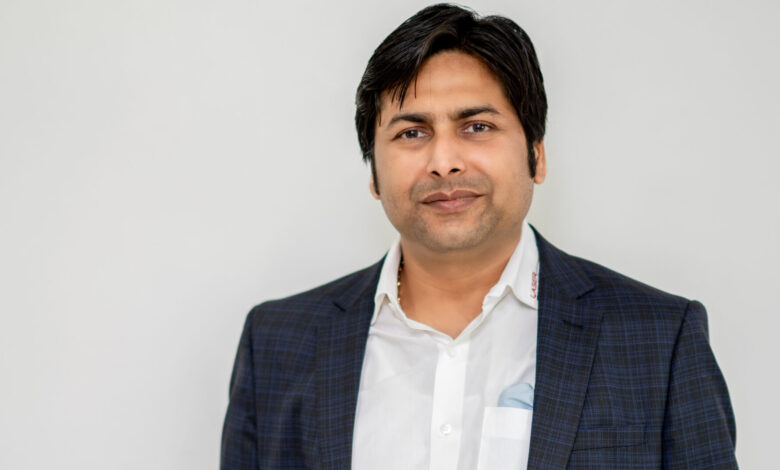
Dr. Rakesh Agarwal, Managing Director, Laser Technologies Ltd., on indigenous technology, intelligent manufacturing and building globally competitive solutions for India’s industrial future
Beyond Machines: Building India’s Manufacturing Future Through Technology, Intelligence and Innovation

1. India aspires to become a global manufacturing hub. What are the biggest opportunities and challenges for the Indian machine tool industry in achieving global competitiveness, and what changes are still required?
On opportunities and challenges for the Indian machine tool industry:
India’s manufacturing ambitions are real, and the demand signals are strong — automotive, EV components, defence, aerospace, and general engineering are all scaling up, and every one of these sectors needs precision machine tools to get there. That’s the biggest opportunity: a genuinely large and growing domestic market that no longer wants to simply import capital equipment but wants a reliable local supply chain. Schemes like PLI and the push for import substitution in capital goods are giving Indian machine tool builders a real runway, and there’s growing confidence among end-users that “Make in India” machinery can match the reliability they used to source only from Europe, Japan, or Taiwan.
From where I sit — building laser cutting, welding, marking, and bending systems for sheet metal fabrication — I’d say the biggest opportunity is also the biggest gap: technology depth. Indian manufacturers are excellent at assembly, application engineering, and cost-effective delivery, but we still import the real value-add — fiber laser sources, high-end CNC controllers, servo drives, precision linear guides, and optics. Until we build a domestic component ecosystem for these, we’re essentially building world-class machines around imported hearts, which limits both our cost competitiveness and our ability to control quality and lead times.
The other major challenge is skilled manpower. Operating and maintaining advanced laser and CNC systems requires a different caliber of technical training than traditional machine tools, and our ITI and polytechnic curricula haven’t caught up with where the technology actually is. We end up training operators in-house, which is expensive and slows scale-up.
Capital cost is also a real constraint — machine tool manufacturing is capex-heavy and R&D-intensive, and Indian financing structures aren’t always suited to the long gestation periods this industry needs before returns show up.
What needs to change, in my view: sustained investment in indigenous component technology (not just final assembly), stronger industry-academia partnerships for skilling on advanced manufacturing systems, easier and cheaper long-term capital for machine tool SMEs, and consistent quality certification standards so Indian-made machines are trusted internationally, not just domestically. Global competitiveness won’t come from cost alone — it will come from India controlling more of the technology stack, not just the final product.
2. Innovation today extends beyond products. How is your organisation driving innovation across manufacturing processes, customer experience, sustainability, workforce development or digital transformation?
On innovation beyond products:
Innovation for us doesn’t stop at the machine we ship — it runs through how we build it, how we support it after the sale, and how sustainably we operate. A few areas where we’ve focused deliberately:
Manufacturing processes: We’ve moved from viewing our laser cutting, welding, marking, and bending solutions as standalone machines to engineering them as integrated fabrication systems. That means tighter design-for-manufacturability at our own end — reducing cycle times, improving repeatability, and building in the automation and material-handling links that let a customer’s shop floor run as a connected line rather than isolated machines. Fifteen years in this business has taught us that the real innovation opportunity now is in the workflow around the machine, not just the machine itself.
Customer experience: Industrial buyers don’t just want equipment, they want uptime. We’ve been investing in remote diagnostics and faster response service models, so issues get flagged and often resolved before they turn into downtime. We’re also spending more time upfront with customers on application engineering — helping them choose the right laser power, bending tonnage, or marking configuration for their actual product mix, rather than selling a generic solution.
Sustainability: Laser processing is inherently more energy- and material-efficient than many conventional cutting or fabrication methods — better nesting, less material waste, lower consumables usage. We’re pushing this further by improving the energy efficiency of our fiber laser systems and helping customers reduce scrap rates, which is a sustainability win that also has a direct cost benefit for them, so adoption comes naturally.
Workforce development: Since advanced laser and CNC systems need skilled operators, we run structured in-house training for our customers’ teams — not just at commissioning, but ongoing skill-building as we release new features. Internally, we’re building similar training pipelines for our own engineers, since retaining and upskilling talent is as critical to innovation as any new product.
Digital transformation: We’re gradually building IoT-enabled monitoring into our machines — giving customers visibility into machine health, utilization, and maintenance schedules through data rather than guesswork. This is still evolving, but the direction is clear: the next competitive edge in machine tools will come as much from software and data as from mechanical and optical engineering.
Innovation, for us, is really about closing the gap between what a machine is capable of and what a customer actually achieves with it day to day.
reduce material waste, improve resource utilisation and move towards more sustainable production.
For us, innovation means continuously improving technology, people and processes to make manufacturing smarter, more efficient and future-ready.
3. Manufacturing success increasingly depends on collaboration across OEMs, suppliers, technology providers, academia and startups. How do you see partnerships shaping the future of manufacturing, and what role does your organisation play in this ecosystem?
On partnerships shaping the future of manufacturing:
No single company today can own the entire value chain of advanced manufacturing, and honestly, trying to would slow you down rather than help you. The complexity of modern machine tools — precision mechanics, laser optics, CNC controls, software, automation — means real innovation now happens at the intersection of multiple players, not within the four walls of one factory. I see partnerships as less of a “nice to have” and more as the actual operating model for this decade.
For us, that plays out in a few ways:
With technology providers: We work closely with global component and laser source manufacturers to stay current with fiber laser technology, control systems, and automation modules, rather than trying to develop every sub-system in-house. This lets us focus our own R&D on system integration, application engineering, and solving the specific problems Indian sheet metal fabricators face — which is where we add the most value.
With OEMs and end-users: Some of our best product improvements have come directly from customer feedback loops — a fabricator telling us where a bending sequence is inefficient, or a job shop flagging a marking accuracy issue in a real production environment. We treat our customers as co-developers, not just buyers, and that shapes our product roadmap more than any internal brainstorming session does.
With suppliers: A machine is only as reliable as its weakest sourced component, so we’ve worked to build long-term, quality-anchored relationships with our supplier base rather than purely transactional, lowest-cost sourcing. That stability matters a lot when you’re promising customers uptime and precision.
With academia and startups: This is an area where the industry as a whole — including us — needs to do more. Machine tool companies in India have traditionally under-invested in academic collaboration compared to global peers. We see real opportunity in partnering with engineering institutes for applied R&D and with startups working on AI-driven quality inspection, predictive maintenance, and automation software — areas that move faster outside a traditional machine-building organization than inside one.
Our role in this ecosystem, as I see it, is to be an integrator and a trusted local partner — someone who brings global-grade laser and fabrication technology, adapts it to Indian shop-floor realities, and stays close enough to customers, suppliers, and technology partners that innovation keeps flowing in both directions. The future of manufacturing competitiveness in India won’t be built by any one company working alone — it will be built by how well we all connect.
4. Looking ahead to 2030, what will define a successful machine tool company? Which capabilities, technologies or leadership qualities will differentiate the industry’s future leaders?
On what will define a successful machine tool company by 2030:
By 2030, I don’t think the differentiator will be who builds the fastest laser or the strongest bending press — the baseline mechanical and optical capability across serious players will largely converge. What will separate the leaders from the rest is how intelligently the machine behaves, how well the company understands its customer’s business, and how resilient its supply chain is.
A few capabilities I’d bet on:
Software and data, not just hardware. The machines that win will be the ones that predict failures before they happen, optimize their own cutting or bending parameters in real time, and hand operators actionable data rather than just readouts. A company that treats itself purely as a mechanical engineering business by 2030 will be behind. We’re already seeing this shift, and it will only accelerate.
Domain depth over general capability. Customers won’t want a generic machine tool supplier — they’ll want a partner who deeply understands their specific process, whether that’s sheet metal fabrication, automotive body-in-white, or precision enclosures. Application knowledge will matter as much as the machine specification sheet.
Supply chain resilience. The last few years have shown how exposed global manufacturing is to component shortages and geopolitical disruption. Companies that have built redundancy into their sourcing — and ideally, more indigenous control over critical components like laser sources and controllers — will have a real edge over those still fully dependent on single-source imports.
Sustainability as a design principle, not an add-on. Energy efficiency, material utilization, and lower-waste processing won’t be a marketing line by 2030 — they’ll be a procurement requirement for many customers, especially those exporting to markets with tightening environmental compliance.
On leadership qualities, I’d point to three things:
Comfort with continuous reinvention. The pace of change in laser sources, automation, and controls means a leadership team that gets comfortable and stops learning will fall behind quickly. The leaders who win will be the ones still asking “what’s next” even when the current product is doing well.
Customer-obsession over product-obsession. The best roadmaps by 2030 will come from listening harder to shop floors, not from engineering teams working in isolation.
Willingness to partner rather than build everything alone. As I mentioned earlier, the companies that plug into the right ecosystem of technology providers, academia, and startups will move faster than those trying to do it all in-house.
If I had to summarize it in one line: the machine tool leaders of 2030 won’t just be equipment manufacturers — they’ll be manufacturing intelligence partners to their customers.
5. As one of the Machine Tool Influencers 2026, what message would you like to share with the next generation of manufacturing professionals and entrepreneurs who will shape India’s industrial future?
A message for the next generation of manufacturing professionals and entrepreneurs:
If there’s one thing 15 years in this industry has taught me, it’s that manufacturing rewards patience and punishes shortcuts. This isn’t a business where you build something clever in a garage and scale it in eighteen months — it takes years to earn the trust of a shop floor, to get a machine reliable enough that a customer stakes their production schedule on it, to build a brand that means something when a fabricator is choosing between you and an established international name. To the young engineers and entrepreneurs entering this space, my honest advice is: be willing to play the long game. The rewards are real, but they come to those who stay in it long enough to master it.
Don’t be intimidated by the fact that so much of the deep technology — laser sources, precision controls, advanced servo systems — is still dominated by global players. That gap is exactly the opportunity. India doesn’t need more assemblers of imported components; it needs engineers and founders willing to go deep into the hard problems — optics, materials science, control algorithms, power electronics — and build genuine intellectual property here. That’s a harder path than systems integration, but it’s the one that will define whether India becomes a real manufacturing hub or just a manufacturing destination.
Get close to the shop floor early in your career, even if your ambitions are in software, design, or business. Some of the best innovations I’ve seen in this industry didn’t come from a lab — they came from watching an operator struggle with a machine and asking “why does it have to work this way?” Manufacturing is still a hands-on discipline, and the professionals who understand both the engineering and the practical reality of production will always have an edge over those who only understand one.
And finally — don’t wait for the ecosystem to be perfect before you start. Skilling gaps, financing challenges, import dependencies — these are all real, and they’re also exactly what our generation has been working to fix. You don’t need every piece in place to begin; you need the conviction to build anyway, and the humility to keep learning as the technology moves. India’s industrial future won’t be built by any one company or any one generation — it’s a relay, and the next leg is yours to run.
do visit – https://lasertechnologies.co.in/